FrieslandCampina Pays $822m For Control Of Ultrajaya, Indonesia's Biggest Aseptic UHT Carton Filler
FrieslandCampina is taking control of PT Ultrajaya Milk Industry in a deal worth US$822 million. Zenith puts Indonesian aseptic UHT white milk at 478 million litres in 2025, growing 10.8% a year to 2030.

The one thing I keep asking dairy boards in Asia is where their milk will come from. FrieslandCampina has just answered a different question. It is paying US$822 million for control of Indonesia's largest UHT filler. Zenith puts Indonesian aseptic UHT white milk at 478 million litres in 2025.
What the deal does
PT Ultrajaya Milk Industry stays listed in Jakarta. Frisian Flag Indonesia joins it. FrieslandCampina moves its 78.09% holding in Frisian Flag into the Indonesian company. Ultrajaya issues up to 7.88 billion new shares at Rp2,150 each. The Jakarta Post put the deal at Rp14.57 trillion, or US$822.4 million at the end of July. Shareholders vote on 27 October.
Ultrajaya reported net sales of Rp8,768 billion in 2025, with milk products at 74% of the total. Its first half of 2026 came in at Rp5.49 trillion, up 34.5% on the year. The trading line is going the right way.
Control without a majority
The disclosed share count is worth reading twice. On the Jakarta Post's reading of the filing, FrieslandCampina's holding company ends with 30.81% of the enlarged Ultrajaya. Control comes from purchase rights the founding family agreed to pass over. Sabana Prawirawidjaja stays president director. The family keeps a large block of shares.
Why the filler matters
Ultrajaya is the reason this deal reaches the aseptic market. Zenith's Global Aseptic Packaging Market Report 2026 puts its share of Indonesian UHT liquid milk at 37%. That is the position at the end of 2025. Ultrajaya has filled aseptically since 1975, using Tetra Pak first and Combibloc from 1998. Its second plant at MM2100 Cibitung started in the third quarter of 2025. That site carries 400,000 tonnes a year of capacity, with 200,000 tonnes in phase one.
The buyer already fills
FrieslandCampina did not lack lines in Indonesia. It opened the largest plant in its group at Cikarang in July 2024. Zenith records that site at EUR 257 million across 25.4 hectares. It takes 400,000 kilogrammes of milk a day and fills 244 million litres of UHT a year. It also makes 456,000 tonnes of sweetened condensed milk. Product goes to Vietnam, the Philippines, Thailand and Malaysia.
Cartons and nothing else
Indonesia is one of the cleanest carton markets in the study. Zenith records no PET, HDPE or pouch in Indonesian aseptic UHT white milk at all. Every litre goes into a carton. The mix inside that carton is moving fast. Family sizes carried 275 million litres in 2025 and reach 299 million by 2030. Portion cartons carried 203 million litres and reach 500 million.
So the small pack takes the market. Portion cartons grow 19.7% a year to 2030. Family cartons grow 1.7%. The share flips from 57.5% family in 2025 to 62.6% portion by 2030. A combined group has to fill more packs for the same litres.
The average Indonesian aseptic pack ran at 291 ml in 2025. Zenith has it falling to 248 ml by 2030. That is the smallest average pack in the Asia-Pacific study. Indonesia buys drinks in small units and buys them often.
What this means for the market
The growth case here is strong and the supply case is weak. Zenith puts Indonesian aseptic volume at 2,020 million litres in 2025, in 6,944 million packs. Aseptic white milk is the fastest block in the country at 10.8% a year to 2030.
Now read the other side. Indonesia supplies about a fifth of its own processing demand. Fresh milk output was 722,883 tonnes in 2025, with 815,000 tonnes forecast for 2026. Dairy imports ran at US$2 billion in 2025, led by New Zealand at 41%. Domestic milk supply grew 1% over six years while processing demand grew 53%. Anyone weighing an Indonesian ambient dairy plan should test the powder cost before the filling cost.
This also raises a wider question around how much Indonesian fill capacity now sits with one owner. That is one of the areas we track across aseptic markets in our 2026 research. The Global Aseptic Packaging Market Report 2026 holds the Indonesian chapter behind these figures. A free 17-page sample is on the page.
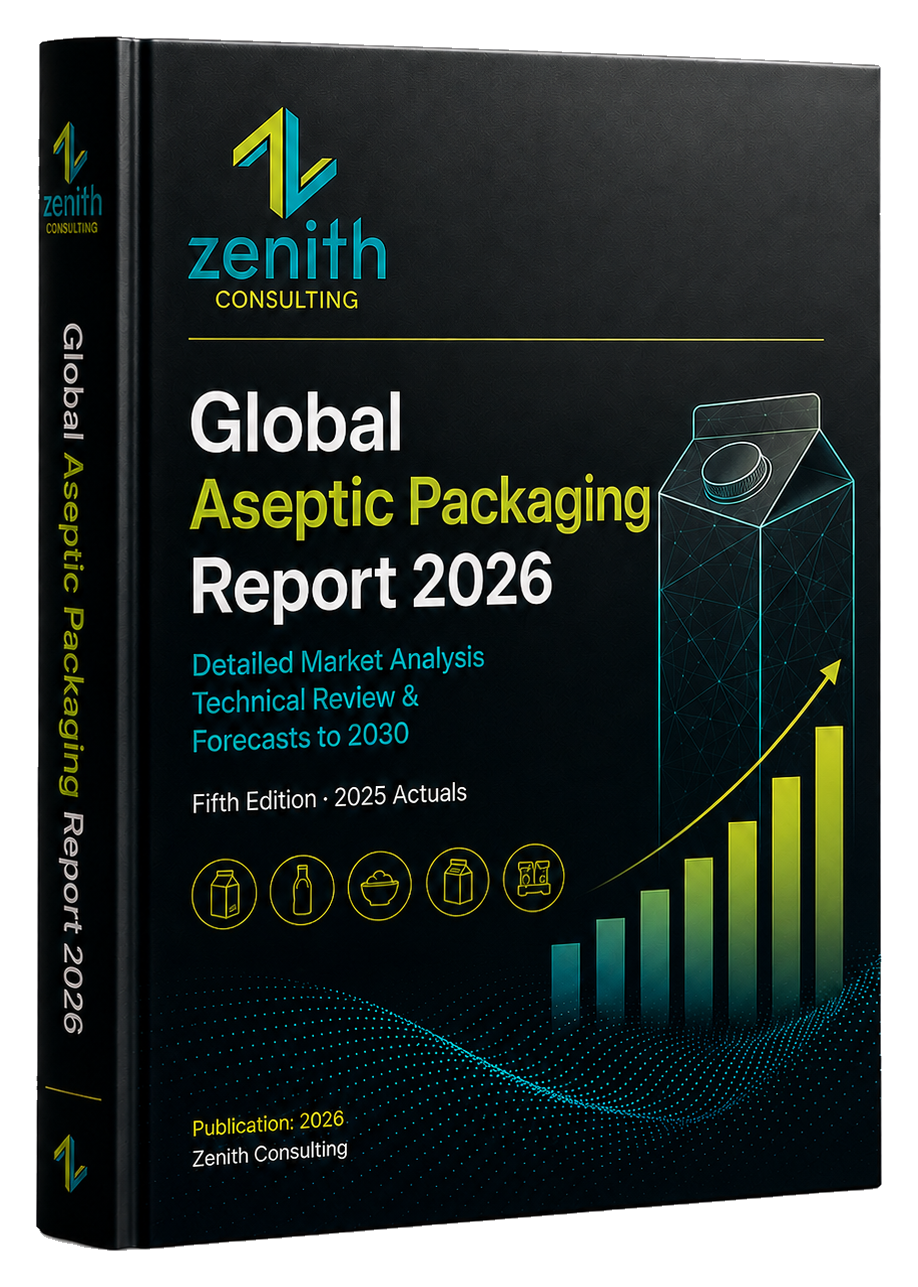
Global Aseptic Packaging Market Report 2026
148.4bn litres and 344bn packs in 2025. Aseptic volumes across dairy, dairy alternatives, beverages and food in 39 markets — 2025 actuals and forecasts to 2030. Buy online and receive it within 24 hours.
More information
Global Cheese Database 2026
Production, imports, exports and consumption for 39 cheese types across 48 countries, with actuals through 2025 and forecasts to 2030. Join the waitlist for early access, pre-launch pricing and a free sample country chapter.
Get early accessStrategic Insights
📊 Analytics & Strategic Insight
Buying the lines is the easy half of an Indonesian dairy plan
The decision most in this industry are avoiding:
👉 The scarce asset in Indonesia is milk rather than filling capacity. Both sides of this deal already fill aseptically at scale. Neither side controls the raw material.
👉 A controlling interest here does not mean a majority of the shares. The Jakarta Post reads the filing as leaving FrieslandCampina's holding company at 30.81%. The founding family's purchase rights do the work.
👉 Growth of 10.8% a year in white milk is a school feeding number. The Free Nutritious Meal programme reached more than 55 million people in its first year. That demand is a policy decision rather than a market one.
Here's the full context:
→ 1975: Ultrajaya began filling aseptically with Tetra Pak, the first in Indonesia.
→ 2020: Indonesia filled 1,427 million litres of aseptic product.
→ April 2024: LamiPak opened Indonesia's first aseptic-carton converting plant at Cikande. It doubled in August 2025.
→ July 2024: Frisian Flag opened FrieslandCampina's largest plant at Cikarang for EUR 257 million.
→ Most recent: FrieslandCampina takes control of Ultrajaya for US$822 million. Shareholders vote on 27 October.
What this means for aseptic fillers, converters and equipment suppliers:
✅ Carton suppliers gain a bigger single buyer in Jakarta. Ultrajaya runs Tetra Pak and Combibloc lines. A combined group orders sleeves for both estates at once.
✅ Portion cartons are where the packs are. Portion sizes go from 203 to 500 million litres of UHT milk by 2030. Family sizes add 24 million litres over the same period.
✅ Equipment makers should price small-pack speed rather than litres. Indonesia's average pack falls to 248 ml. The same litres then need far more packs an hour.
What this means for market decisions:
1️⃣ Indonesian aseptic volume reaches 2,745 million litres by 2030. That is 725 million litres of new volume on a 2,020 million base. White milk carries the fastest part of it.
2️⃣ One group now sits across the leading UHT brand and the largest plant. Smaller fillers lose the easiest way to national distribution. Carton suppliers gain scale and lose a buyer.
3️⃣ An entrant should price recombined milk before it prices a line. Indonesia supplies about a fifth of its own processing demand. Imports ran at US$2 billion in 2025.
The Zenith view:
This deal proves that ambient dairy in Indonesia is worth paying up for. It does not prove that the group can supply what it has bought. So the deciding test is what recombined powder costs once school feeding has taken its share.
The data behind this story
📦 Global Aseptic Packaging Market Report 2026
148.4 billion litres and 344 billion packs across 39 markets, split by category, pack type and pack size, with 2025 actuals and forecasts to 2030. A free 17-page sample is on the page.
→ Read the free sample
Evaluating Indonesia? Zenith helps food and beverage companies assess market size, growth, competitors, pricing and route to market before they invest.
→ Discuss your market
Zenith Consulting
Submit your food & beverage project enquiry.
Share your requirements. If there is a strong fit, we’ll come back with an indicative investment range, project timeline and recommended strategic approach.
Reviewed by Zenith Consulting’s senior food & beverage strategy team.
Related analyses
- M&A, Investment & Valuation
EEX Hands Its Dairy Market To CME: Europe Makes 10.8 Million Tonnes Of Cheese And Cannot Hedge Any Of It
CME Group will take over the European Energy Exchange dairy business before the end of 2027, including the weekly cheese indexes for cheddar curd, mild cheddar, young gouda and mozzarella. Europe makes 10.8 million tonnes of cheese a year and still has no cheese futures contract behind it.
Read analysis → - Health, Nutrition & Functional
Fonterra Puts NZ$1 Billion Into Protein While New Zealand Ships 415,012 Tonnes Of Cheese
Fonterra committed NZ$1 billion to South Island protein plants on 24 September. New Zealand exported 415,012 tonnes of cheese in 2025, about 97% of everything it made, with China taking 30%.
Read analysis → - Corporate Strategy & Portfolio
South East Asia Fills 18.1 Billion Litres Of Aseptic Product: One Region Carries A Third Of World Growth To 2030
South East Asia filled 18,103 million litres of aseptic product in 2025 and reaches 21,979 million by 2030. That is a third of all world aseptic growth from a region holding 12.2% of world volume.
Read analysis →
Share it with your peers
Pass this analysis to colleagues who track the food and beverage market.
Zenith Market Intel
Need a specific food or beverage market report?
Tell us which category, region or question would be useful for your team.
Sister Publication
Also follow our Water Dispense Market Intelligence
Category analyses, operator briefings, and investor signals across the global water dispense market.