Namibia Dairies Installs 8,000 Packs An Hour Tetra Pak Aseptic Line To Defend Local UHT Milk From South Africa
Namibia Dairies has installed a Tetra Pak line that fills up to 8,000 packs of long life milk an hour and adds a 500 ml pack. It is a defence of the home shelf against South Africa, the carton giant next door.
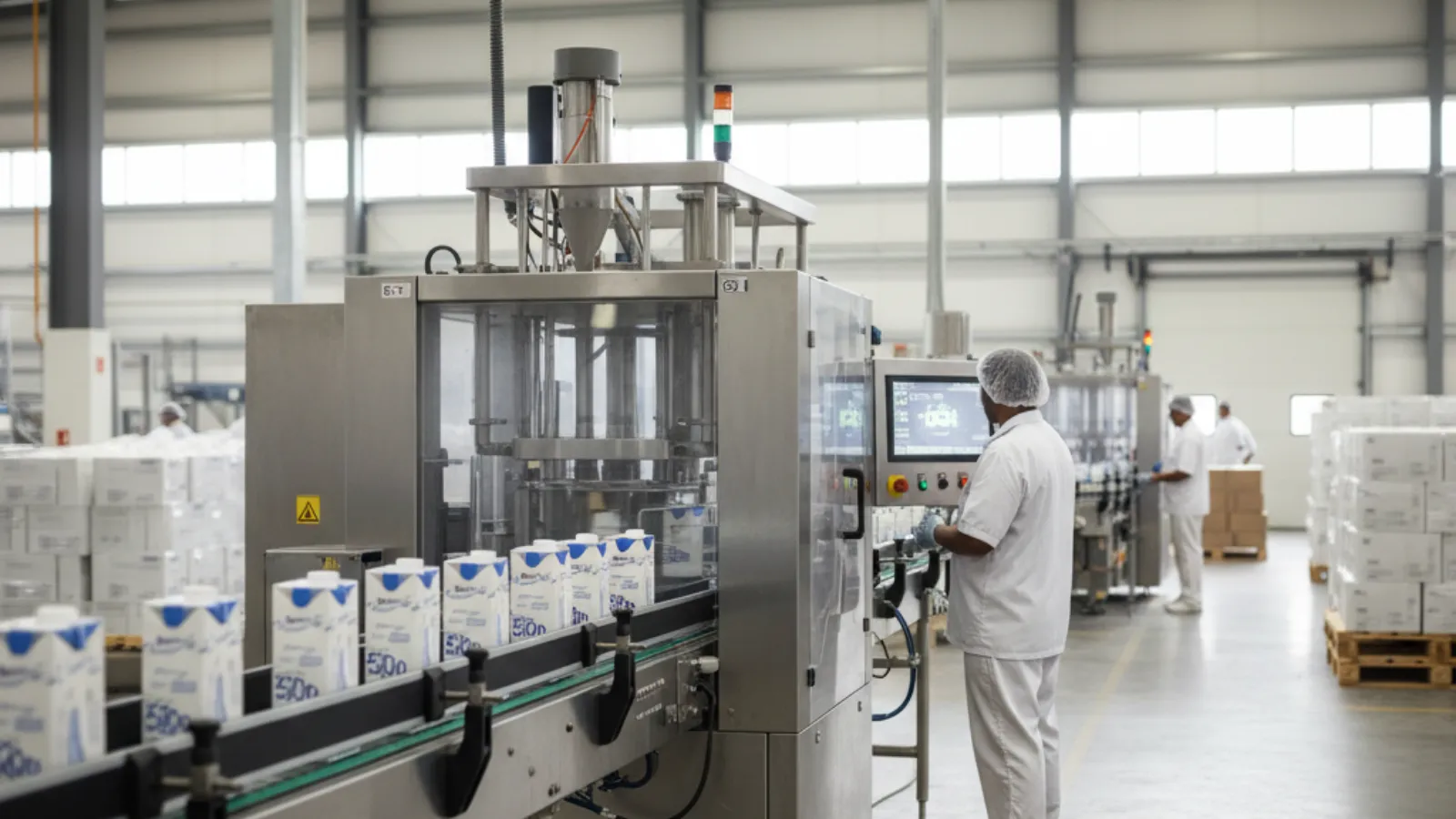
I keep seeing the same move in small dairy markets that sit next to a big one. The local plant stops trying to match the neighbour on price. It buys a better filler and changes the pack instead. Namibia Dairies has spent about 54.5 million Namibian dollars on a new Tetra Pak aseptic line. It fills up to 8,000 packs an hour. My view is that this is a defence of the home shelf more than a bet on fast growth.
What Namibia Dairies installed
Namibia Dairies belongs to the OL Group. Its old filler packed the country's only local long life milk for more than 15 years. The new Tetra Pak A3/Flex replaces it, with a new conveyor, an accumulator and a case packer. The caps change too. Moulded caps with a tamper ring replace caps that were glued on. That matters because the old machine was getting hard to keep running. Parts and service support were harder to find each year. A filler that stops can waste milk that has already been heat treated. The dairy expects packaging waste to fall from about 4% to 1.5%. OL Group chairman Sven Thieme came to see the new line running. He called it a sign of confidence in Namibian manufacturing.
Why the pack matters more than the speed
The line also adds a 500 ml UHT pack. Namibia Dairies says it could later fill ambient juice on the same line. Here is why that matters. A small market cannot win on cost per litre against a neighbour many times its size. It can compete on range. A smaller pack suits one person, one lunchbox or one trip to a shop. The dairy puts long life milk at six to nine months on the shelf, against weeks for fresh product. That shelf life counts for a lot in a country of long roads and small towns. A shop far from Windhoek can hold long life stock for months. A chilled supply chain has to restock it far more often.
Shops in a small market carry a short range. Each pack size gets only a few facings. The family carton is where price wins those facings, so the import usually takes it. Smaller packs leave room for a local brand that shoppers already know.
The neighbour with the scale
South Africa is the market Namibia Dairies has to hold off. Zenith's Global Aseptic Packaging Market Report 2026 puts South Africa's aseptic fill at 1,315 million litres in 2025. UHT white milk is 989 million litres of that. That happens because South African shoppers learned to trust the carton. Power cuts and food inflation made a milk that needs no fridge the safe buy. Large dairies there fill around the clock and sell across the region. Their milk also crosses the border. South African exports of liquid milk reached 98,859 tonnes in 2024. Most of that value goes to five close neighbours, and Namibia is one of them. A Namibian plant meets those packs on its own shelves every day.
The pack material still comes from the south
One detail in the plan shows how closely the two markets are tied. Namibia Dairies will buy its pack material from South Africa. That points to the Tetra Pak plant at Pinetown in KwaZulu-Natal. It is the only aseptic carton plant in South Africa. Pinetown reopened in 2024 after a rebuild and can make 1.8 billion packs a year. By 2025 it met most of South Africa's own demand. Lead times fell from 60 days to 14. That matters for a small filler. A shorter lead time means less material held in stock and less cash tied up in it. New Era reports that the dairy expects lower stock needs from the change. So the plant that serves Namibia's rivals also makes the local defence cheaper.
A small milk pool behind the line
The harder limit is milk. Namibia's dairy herd has shrunk for years. Local milk fell to 15.6 million litres in 2022, according to The Namibian. Five years earlier it was 24 million. Only four dairy farms were left by then, and one large farm made almost all the milk. The reason is simple. Feed is mostly imported, and cheap South African milk set the shelf price. Namibia once shielded local UHT milk with an import duty. That shield lapsed more than ten years ago. So the new line is planned around regional milk as well as local supply. New Era says it will take rising volumes from Namibian and regional farms. A fast modern filler needs a steady milk stream to pay its way.
The Zenith read: the line holds the shelf while growth stays slow
We think the new line keeps local UHT milk on Namibian shelves, but it will not bring fast growth. Here is why. The wider market around it grows slowly. Zenith forecasts South African UHT white milk at 1,035 million litres by 2030. That is growth of about 0.9% a year. A small market tied to it by trade will move at a similar pace. The gain for Namibia Dairies comes from fewer stoppages, less waste and a pack its rivals must answer. The 500 ml pack is the part to watch. If it sells, the dairy has a reason to add juice and run more hours. The figure that would change our call is the local share of UHT packs on Namibian shelves. If it rises over two years, the line is winning back ground. If it holds flat, the money only stopped the slide.
We will be watching whether small dairies beside large carton markets keep investing in their own fillers. Botswana, Eswatini and Lesotho face the same neighbour. That pattern forms part of our Global Aseptic Packaging Market Report 2026. It splits South Africa by product, pack type and pack size, with forecasts to 2030.
Going deeper on this market? See the Global Aseptic Packaging Market Report 2026.

Global Water Database 2026
Packaged, bulk, flavoured and premium water in 86 markets, to 2030.
More information
Global Cheese Database 2026
Production, imports, exports and consumption for 39 cheese types across 48 countries, with actuals through 2025 and forecasts to 2030. Buy one market or any five with a single-user, departmental or corporate licence, or get your free database and report sample first.
Get your free database & report sampleStrategic Insights
📊 Analytics & Strategic Insight
A new filler keeps Namibian UHT milk on the shelf, and the small pack decides whether it grows
The decision most in this industry are avoiding:
👉 The fight moves next to the single serve pack. Woodlands Dairy in South Africa already fills a half litre Tetra Stelo pack. Namibia Dairies is arriving late to that shelf.
👉 Cross-border milk sets the price a small dairy can charge. A local plant can price above the import only by the cost of the trip. Range and freshness of stock have to carry the rest.
👉 The carton plant next door helps both sides. Pinetown also ships to Mozambique, Zimbabwe, Zambia, Malawi and Botswana. Every small filler in the region now buys material made close by.
Here's the full context:
→ 2006: Namibia moved to raise its import duty on UHT milk to protect local filling.
→ 2014: The last extension of that shield had run out by then.
→ 2024: Tetra Pak reopened its rebuilt Pinetown plant in South Africa.
→ 2025: South Africa filled 1,315 million litres of aseptic product, on Zenith's figures.
→ Most recent: Namibia Dairies started its new Tetra Pak line. It adds a 500 ml pack and may add juice.
What this means for aseptic fillers, converters and equipment suppliers:
✅ The equipment supplier should treat small markets as service contracts. Namibia Dairies changed machines because parts and support ran short. Uptime wins the next order.
✅ The South African export team should expect a fight over smaller packs. A local half litre pack takes the single serve sale first. The family carton is harder to dislodge.
✅ The line planner should budget for regional milk. A local herd this small cannot keep a modern line busy on its own.
What this means for market decisions:
1️⃣ Namibian UHT milk is a defended market rather than a growing one. Volume moves with the region, and a new line protects share.
2️⃣ South African fillers keep the cost lead, while the local dairy gains on range. Each side wins a different part of the shelf.
3️⃣ An entrant should study the border before the plant. Check how much milk crosses from South Africa, and at what shelf price.
The Zenith view:
This proves Namibia Dairies will keep filling long life milk at home. It does not prove the smaller pack can win share from imports. The figure that settles it is the local share of UHT packs sold in Namibia. The first full year on the new line gives the first read.
The data behind this story
📦 Global Aseptic Packaging Market Report 2026
148.4 billion litres and 344 billion packs across 39 markets, split by category, pack type and pack size, with 2025 actuals and forecasts to 2030. A free 40-page sample is on the page.
→ Read the free sample
Weighing a dairy or UHT move into southern Africa? Zenith helps food and beverage companies assess market size, growth, competitors, pricing and route to market before they invest.
→ Discuss your market
Zenith Consulting
Submit your food & beverage project enquiry.
Share your requirements. If there is a strong fit, we’ll come back with an indicative investment range, project timeline and recommended strategic approach.
Reviewed by Zenith Consulting’s senior food & beverage strategy team.
Our market reports
All reports and databases Available now
Global Aseptic Packaging Market Report 2026
39 markets, 2025 actuals and forecasts to 2030 by category, region and pack type.
View report Available now
Global Cheese Database 2026
48 markets and 39 cheese types: production, trade and consumption to 2030.
View report Available now
UK Water Drinks Reports 2026
Plain, flavoured and functional water in the UK: companies, brands, own label and forecasts to 2030.
View report- Available now
Global Water Database 2026
Packaged, bulk, flavoured and premium water in 86 markets, to 2030.
View report  Available now
Global Premium Bottled Water Report 2026
Premium water volume, value and brands, with six country deep dives.
View report Available now
Global Water Dispense Market Reports 2026
Coolers, dispensers and operators across 35+ markets, with forecasts to 2030.
View report- Free tool
Cheese Market Sizer
Size any of 48 cheese markets: 2025 consumption, kg per person, your market share and headroom.
Open free tool
Related analyses
- Market & Category Growth
EU Cheese Exports To Fall 2.4% Next Year As Cheaper US Cheese Wins Buyers, USDA Says
USDA expects EU cheese exports to fall 2.4% in 2027, to 1.44 million tonnes, as cheaper US cheese and new tariffs bite. EU cheese output slows as milk tightens, while imports into the EU rise.
Read analysis → - Corporate Strategy & Portfolio
Spain Swaps HDPE Milk Bottles For Aseptic PET: 170 Million Litres Left And Only Three Aseptic PET Dairy Lines
Spanish UHT milk in large HDPE bottles fell from 307 million litres in 2020 to 170 million in 2025, and Zenith's model takes it to 88.5 million by 2030. Aseptic PET is taking the volume, and only three aseptic PET dairy lines have been documented in the country.
Read analysis → - Market & Category Growth
Foremost Farms Exits 40lb Block Cheese: $13 Billion Of New US Dairy Capacity Is Closing Old Cheddar Lines
Foremost Farms will close its Marshfield, Wisconsin cheese plant in December and stop making 40lb block cheddar, and it names new US cheese capacity as a reason. With $13 billion of dairy plants under way and blocks trading below barrels, the old bulk line is the first casualty.
Read analysis →
Share it with your peers
Pass this analysis to colleagues who track the food and beverage market.
Zenith Market Intel
Need a specific food or beverage market report?
Tell us which category, region or question would be useful for your team.
Sister Publication
Also follow our Water Dispense Market Intelligence
Category analyses, operator briefings, and investor signals across the global water dispense market.