SIG Signs 17 Aseptic Filling Lines In Dubai: New Carton Capacity Or Middle East And Africa Renewal?
SIG signed agreements for 17 aseptic carton, pouch and bag-in-box filling lines at Gulfood Manufacturing, up from nine a year ago. Zenith's data suggests most of them will renew old fillers or win share, so the real growth story sits in a few African milk markets.
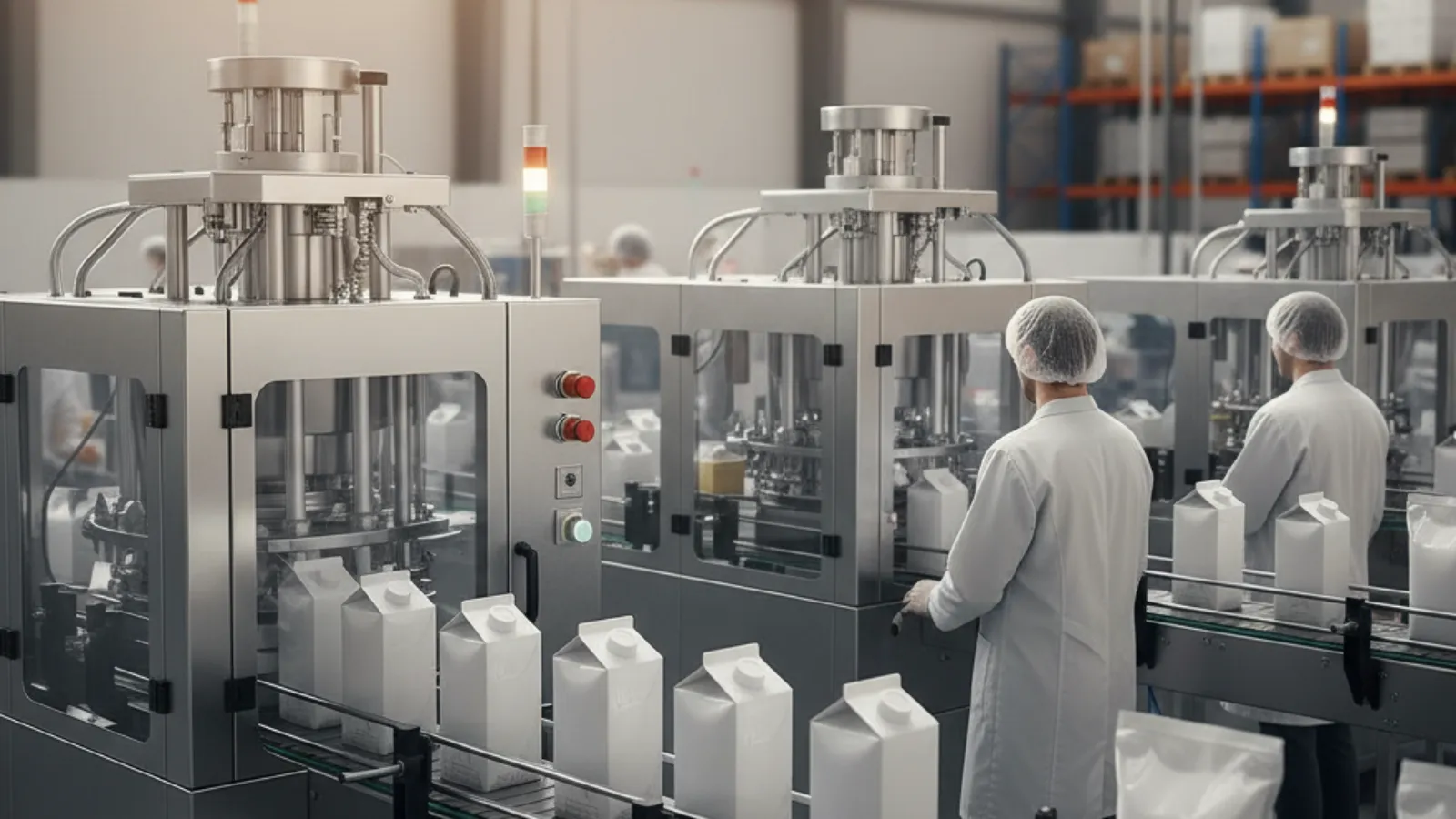
I think 17 is the most useful number SIG has published this autumn. My view is simple. A filling line sold today shows where cartons will be filled for the next ten years. SIG signed agreements for 17 new lines at Gulfood Manufacturing in Dubai this month. That is almost double the nine lines it sold at the same show a year ago. The harder job is working out how much of it is new demand.
What SIG signed in Dubai
The deals were signed at the trade show in the first week of November. SIG named no buyers and no countries. It said the lines will fill aseptic cartons, spouted pouches and bag-in-box packs. They go to food and drink makers across India, the Middle East and Africa. SIG runs that business as one region from Dubai. The show has become its main shop window there. In 2024 SIG sold 13 lines at the same event. In 2025 the count fell to nine. Here is why the swing matters. Big dairies and juice makers buy fillers in waves. A firm may order three lines in one year and none for the next four. So one show is a noisy signal, while three shows in a row tell you more. Read together, the count dipped and then rose to a new high.
Why one filler sale is worth years of packs
Most of SIG's revenue comes from aseptic carton sales rather than machines. The filler comes first. The customer then buys its packaging from SIG for as long as the line runs. That matters because a carton filler is built for one carton system. A dairy cannot feed a rival's sleeves into it. So every carton line SIG signs works like a long supply contract, even when nothing says so on paper. The deals also cover pouch and bag-in-box lines. SIG did not give the split. Its field count gives a clue about what the deals add. SIG had 323 aseptic carton fillers working in the region at the end of 2024. A year later it had 333. The base grew by only ten machines, so most of the lines it sold replaced older ones.
Sales follow the lines, a year or so later
SIG's results show how slowly new lines turn into revenue. In 2025 the region grew just 0.4%, at constant currency and resin. The year before, it had grown by more than 13%. Then the third quarter of 2026 turned sharply. Regional revenue rose 18.2% to 115.4 million euros. SIG credited Egypt, Saudi Arabia, North Africa, South Africa and Mauritania. That happens because a new line takes months to install and test. Packaging sales start only once the dairy fills for the shops. Lines signed this month will mostly show up in SIG's sales from 2027. Part of the third quarter jump is also price. SIG passed higher input costs on to customers through surcharges. Over nine months the region grew a slower 5.8%. Its pouch and bag-in-box sales were weak over the same period.
What the Middle East and Africa already fill
Zenith's Global Aseptic Packaging Market Report 2026 puts Middle East and Africa use at 11,246 million litres in 2025. That came in 23,206 million packs. Our region covers nine modelled markets, from Turkey and Saudi Arabia to Nigeria and Kenya. India sits in a different region in our study, so SIG's sales area is wider than ours. Cartons carry 87.6% of the litres. The reason is simple. White milk is the biggest product, at 6,127 million litres. Most of it goes into family cartons, because larger households buy larger packs. Egypt is the second largest market after Turkey. It filled 2,304 million litres. Kenya is the fastest grower, at 9.4% a year since 2020. Long-life milk suits homes with no fridge and a thin cold chain.
How many new lines the growth needs
Our forecast has the region growing 2.4% a year to 2030. In packs that means about 680 million extra a year. Now compare that with what one line can fill. Arla runs a SIG carton filler in Riyadh rated at 12,000 packs an hour. Assume it runs 5,000 hours a year. It would then fill about 60 million packs. The mechanism is simple arithmetic. About 11 such lines a year would cover the whole region's growth. SIG alone signed more than that in three days, in a year when Tetra Pak is selling too. So many of these lines must replace old fillers or take volume from a rival. Both are good business for SIG. Neither adds many litres to the region.
The Zenith read: mostly renewal, with growth in African milk
We read most of these lines as replacement and share gains rather than new litres. A newer filler still matters to the buyer. It runs faster and wastes less, so the cost per pack falls. That lets a dairy price harder on the shelf. That gap exists because the region's pack growth is steady while filler orders come in waves. We expect real new volume to come mainly from African milk markets such as Kenya. Rival suppliers should expect sharper bids for every renewal. The figure that would change our call is SIG's year end filler count for the region. If it jumps by far more than last year's ten, new capacity is running ahead of renewal.
This raises a wider question. How much of the region's filler buying adds litres, and how much renews old lines? That is one of the areas we are tracking across global aseptic packaging markets in our 2026 research. The Global Aseptic Packaging Market Report 2026 splits the region by product, pack type and pack size.
Going deeper on this market? See the Global Aseptic Packaging Market Report 2026.
Global Water Database 2026
Packaged, bulk, flavoured and premium water in 86 markets, to 2030.
More information
Global Cheese Database 2026
Production, imports, exports and consumption for 39 cheese types across 48 countries, with actuals through 2025 and forecasts to 2030. Buy one market or any five with a single-user, departmental or corporate licence, or get your free database and report sample first.
Get your free database & report sampleStrategic Insights
📊 Analytics & Strategic Insight
SIG is winning the renewal cycle, and that is a different prize from growth
The decision most in this industry are avoiding:
👉 India is SIG's growth market, and most Middle East reads leave it out. Our report puts India at 5,074 million litres in 2025. It has grown 6.9% a year since 2020.
👉 Pouches and bag-in-box are the soft side of the region. Bag-in-box fills only 297 million litres across the Middle East and Africa in our data. It serves food service and the tomato trade.
👉 A faster filler adds capacity without adding a line. SIG's Neo Slimline 15 fills up to 15,000 family packs an hour. That is a third more than its standard machines.
Here's the full context:
→ 2021: SIG opens its innovation hub in Dubai Silicon Oasis.
→ 2024: SIG sells 13 filling lines at Gulfood Manufacturing.
→ 2025: SIG sells nine lines at the show. Regional revenue grows 0.4% for the year.
→ 2026: Regional revenue rises 18.2% in the third quarter.
→ Most recent: SIG signs agreements for 17 lines in Dubai. It names no buyers and no countries.
What this means for aseptic fillers, converters and equipment suppliers:
✅ The dairy buyer renewing a filler has more pull than usual. Two suppliers want the same renewal, so tie the packaging price to the line deal.
✅ The rival carton sales team should list the oldest fillers in its own base. Those are the lines SIG will bid for next.
✅ The plant engineer should cost one fast filler against two old ones. Floor space, staff and waste all change with the swap.
What this means for market decisions:
1️⃣ The region's growth is in small packs more than litres. Portion cartons reached 12,465 million packs in 2025, against 8,061 million family packs.
2️⃣ SIG is strongest where milk leads. In Saudi Arabia cartons carry 97% of aseptic litres, and the country converts its own cartons.
3️⃣ An entrant should map the renewal cycle before the growth curve. Count the fillers due for renewal in each country. That is where the next orders come from.
The Zenith view:
This proves SIG had a strong show and a strong quarter in the region. It does not prove the region is filling much more. The figure that settles it is SIG's year end filler count, published with its 2026 results. A jump well above last year's ten would mean new capacity, and we would raise our view.
The data behind this story
📦 Global Aseptic Packaging Market Report 2026
148.4 billion litres and 344 billion packs across 39 markets, split by category, pack type and pack size, with 2025 actuals and forecasts to 2030. A free 40-page sample is on the page.
→ Read the free sample
Weighing a filling or carton move in the Middle East and Africa? Zenith helps food and beverage companies assess market size, growth, competitors, pricing and route to market before they invest.
→ Discuss your market
Zenith Consulting
Submit your food & beverage project enquiry.
Share your requirements. If there is a strong fit, we’ll come back with an indicative investment range, project timeline and recommended strategic approach.
Reviewed by Zenith Consulting’s senior food & beverage strategy team.
Our market reports
All reports and databases Available now
Global Aseptic Packaging Market Report 2026
39 markets, 2025 actuals and forecasts to 2030 by category, region and pack type.
View report Available now
Global Cheese Database 2026
48 markets and 39 cheese types: production, trade and consumption to 2030.
View report Available now
UK Water Drinks Reports 2026
Plain, flavoured and functional water in the UK: companies, brands, own label and forecasts to 2030.
View report- Available now
Global Water Database 2026
Packaged, bulk, flavoured and premium water in 86 markets, to 2030.
View report  Available now
Global Premium Bottled Water Report 2026
Premium water volume, value and brands, with six country deep dives.
View report Available now
Global Water Dispense Market Reports 2026
Coolers, dispensers and operators across 35+ markets, with forecasts to 2030.
View report- Free tool
Cheese Market Sizer
Size any of 48 cheese markets: 2025 consumption, kg per person, your market share and headroom.
Open free tool
Related analyses
- Innovation & Technology
US Cottage Cheese Curd Hits 514 Million Pounds: AMPI Hands A Cheddar Plant Over And The Sweet Whey Goes With It
US cottage cheese curd output reached 514.3 million pounds in 2025, up 14.7%, while all other cheese grew 4.0%. AMPI is switching its Blair cheddar plant to cottage cheese and Westby has just cut the ribbon on a 50% capacity lift.
Read analysis → - M&A, Investment & Valuation
Arla and DMK Are Building a €19 Billion Dairy Giant. The Real Antitrust Fight Is Over Farmers, Not Shoppers.
Arla Foods and DMK are weeks from forming Europe's largest dairy cooperative — around €19 billion in revenue, 12,200 farmer-owners, and roughly 13% of all EU milk. With the European Commission's decision due 28 May, the real antitrust fight is over farmers' options to sell their milk, not what shoppers pay.
Read analysis → - Corporate Strategy & Portfolio
US Cheddar Blocks Rally 42.75 Cents In Four Weeks While Milk Output Climbs 2.7%: American Cheese Stocks Fall To 792 Million Pounds
US farms in the major states made 18,724 million pounds of milk in September, up 2.7%. Cheddar blocks still rose 42.75 cents in four weeks, while American cheese stocks fell.
Read analysis →
Share it with your peers
Pass this analysis to colleagues who track the food and beverage market.
Zenith Market Intel
Need a specific food or beverage market report?
Tell us which category, region or question would be useful for your team.
Sister Publication
Also follow our Water Dispense Market Intelligence
Category analyses, operator briefings, and investor signals across the global water dispense market.