US Cottage Cheese Curd Hits 514 Million Pounds: AMPI Hands A Cheddar Plant Over And The Sweet Whey Goes With It
US cottage cheese curd output reached 514.3 million pounds in 2025, up 14.7%, while all other cheese grew 4.0%. AMPI is switching its Blair cheddar plant to cottage cheese and Westby has just cut the ribbon on a 50% capacity lift.
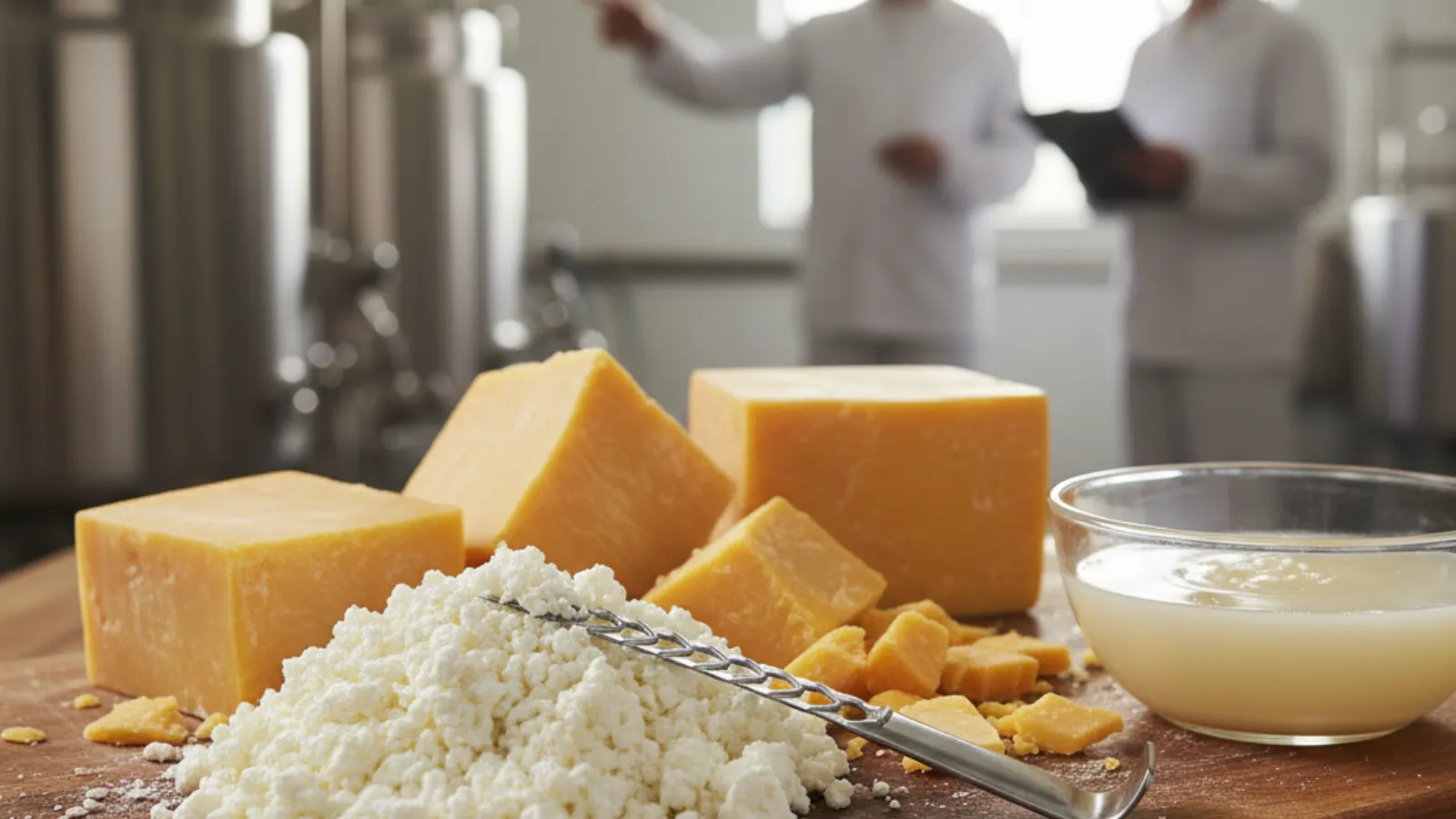
Most of the coverage reads cottage cheese as a protein trend. I read it as a swap. Vats that used to make cheddar are being handed to it.
US cottage cheese curd output hit 514.3 million pounds in 2025. That is up 14.7% on the year, USDA figures show. All other cheese grew 4.0%.
A cheddar plant is being handed over
Associated Milk Producers Inc is turning its Blair plant in Wisconsin from cheddar to cottage cheese. The co-op said the switch takes about a year. Around 86 staff went on temporary layoff from 31 March 2026. AMPI expects to reopen in early 2027. It says Blair will then be one of the largest cottage cheese plants in the country.
Member milk goes to nearby plants while the work runs. That is a year of throughput moved off site. A co-op cannot stop taking milk from its farms, so the milk has to go somewhere. The real cost of the switch sits in that year, rather than in the equipment bill.
Westby cut the ribbon on 9 September
Westby Cooperative Creamery finished a project worth close to $15 million and cut the ribbon on 9 September. A USDA Rural Development guarantee backed $14.1 million of it. The co-op says the new kit lifts its cottage cheese capacity by 50%.
The equipment is a closed vat built by Nordic Dairy Technology of Denmark. Jon Fosse, who founded the firm, said it is the first in the United States. The old way uses an open vat and a 70-pound knife to cut the curd by hand. Westby was already sold out at about 13.1 million pounds a year. The new vat adds 6 to 7 million pounds. The extra is sold as well.
Nobody loses a job. Staff move into maintenance and warehousing. The co-op began in 1903 and its farms average 38 cows. The plant on Main Street is 100 years old. It is the only cottage cheese maker in Wisconsin.
The numbers behind the spend
Cottage cheese curd grew nearly four times faster than the rest of cheese last year. Curd reached 514.3 million pounds, up 14.7%. Creamed cottage cheese reached 470.8 million pounds, up 11.7%. Lowfat reached 422.2 million pounds, up 11.4%. Cheddar grew 5.8% to 4.00 billion pounds.
The pull is coming from the shelf. The National Milk Producers Federation puts retail cottage cheese sales up 40% between 2022 and 2025. AMPI says demand is at its highest level since 2009. Both co-ops say the same thing about that demand. They cannot serve it with the vats they own.
The whey changes with the vat
Cheddar makes sweet whey, and sweet whey is what dry whey and WPC80 are made from. Cottage cheese makes acid whey instead. Acid whey sits at a pH of 4.3 to 5.6. It carries more ash and more organic acid. Few buyers want it. It also has a high oxygen demand in water, so most of it is a cost to remove.
US dry whey output fell 1.0% to 845 million pounds in 2025, while cheese rose 4.0%. Some of that is whey moving into richer fractions. Whey protein concentrate rose 2.1% and lactose rose 2.6%. Even so, a vat that leaves cheddar leaves the sweet whey pool for good.
Fresh cheese travels badly
A cheddar plant makes something that keeps, and a cottage cheese plant does not. Blair's 40-pound blocks could age, sit in store and move on the exchange or abroad. Cottage cheese lasts weeks rather than months. It has to sell close to home and sell fast.
That changes who you sell to as much as the vat does. A block plant sells to traders, to makers and to export buyers. A cottage cheese plant sells to chilled retail, and chilled shelf space is finite. Both co-ops have pre-sold their new output. That tells you the shelf is pulling hard today. It also tells you how quickly it could stop.
What to do about it
Price the acid whey before you price the vat. Ask where the sweet whey went if you buy protein. Check how much of your supplier's cheddar capacity has moved. Count the tonnes, rather than the sales growth. Book chilled shelf space early if you are building. Treat pre-sold volume as a snapshot and re-check it every year.
Two plants are easy to report. The harder number is how many tonnes of cottage cheese a country makes. And what it stopped making to get there. Our Global Cheese Database 2026 tracks cottage and quark as its own type, in tonnes. It covers 48 markets, next to cheddar and mozzarella. The waitlist comes with a free sample country chapter.
Global Aseptic Packaging Market Report 2026
148.4bn litres and 344bn packs in 2025. Aseptic volumes across dairy, dairy alternatives, beverages and food in 39 markets — 2025 actuals and forecasts to 2030. Buy online and receive it within 24 hours.
More information
Global Cheese Database 2026
Production, imports, exports and consumption for 39 cheese types across 48 countries, with actuals through 2025 and forecasts to 2030. Join the waitlist for early access, pre-launch pricing and a free sample country chapter.
Get early accessStrategic Insights
📊 Analytics & Strategic Insight
The cottage cheese boom is buying capacity from somewhere, and the bill lands on the whey plant
The decision most in this industry are avoiding:
👉 The growth is a swap rather than an addition. Blair is old cheddar capacity with a new label. The national vat count barely moves.
👉 Nobody has priced the acid whey. A cheddar vat pays part of its way through sweet whey. A cottage cheese vat hands you a stream you pay to remove.
👉 Pre-sold volume feels like proof and behaves like a trend. Both co-ops sold the new output before it existed. That is a strong signal today and a thin one in three years.
Here's the full context:
→ 2009: US cottage cheese demand was last as high as it is today, before a long slide.
→ 2022: Retail cottage cheese sales start the run that lifts them 40% by 2025.
→ February 2026: AMPI says Blair will switch from cheddar to cottage cheese. About 86 staff go on temporary layoff from 31 March.
→ Full year 2025: Curd output reaches 514.3 million pounds, up 14.7%. Dry whey falls 1.0% to 845 million pounds.
→ Most recent: Westby cut the ribbon on 9 September. Its cottage cheese capacity rises by 50%.
What this means for cheese producers, traders and buyers:
✅ Sweet whey gets tighter than the cheese numbers suggest. Cheese output can rise while the sweet whey pool shrinks. Protein buyers should track vat type, rather than cheese tonnes.
✅ Cheddar loses a plant for a year. Blair's milk goes to neighbours until early 2027. That is regional cheddar volume out of the market now.
✅ Fresh cheese ties you to chilled shelf space. A block plant sells to anyone with a warehouse. A cottage cheese plant sells to a buyer with a fridge.
3 moves you can make this week:
1️⃣ List every plant in your supply base that changed product since 2024. Mark the ones that left rennet-set cheese. Those are your sweet whey losses.
2️⃣ Ask your whey supplier what share of its intake is acid. The answer tells you how firm your WPC80 contract really is.
3️⃣ Put a renewal date on any pre-sold volume you count on. Treat sold out as a snapshot and check it again each year.
The data behind this story
🧀 Global Cheese Database 2026
Production, imports, exports and consumption for 39 cheese types across 48 countries, in tonnes, with actuals to 2025 and forecasts to 2030. The 2026 edition is being built market by market. Waitlist members get the pre-launch price and a free sample country chapter.
→ Join the waitlist
Zenith Consulting
Submit your food & beverage project enquiry.
Share your requirements. If there is a strong fit, we’ll come back with an indicative investment range, project timeline and recommended strategic approach.
Reviewed by Zenith Consulting’s senior food & beverage strategy team.
Related analyses
- Market & Category Growth
US Cheese Warning Labels Move Closer: Bongards Adds 180 Million Pounds Of Process Cheese Anyway
A US Senate committee has advanced a bill that would put a front-of-pack warning on whole milk, all cheese and most yogurt. Bongards is still spending $135 million on 180 million pounds more process cheese, and the channel split explains why.
Read analysis → - Market & Category Growth
Tetra Pak Takes Tetra Recart Into Chinese Dessert Soups: World Aseptic Food Is Stuck At 8.3 Billion Litres
Tetra Pak and Shanghai Meilin have put two ready-to-eat dessert soups into Tetra Recart, a carton that is sterilised after filling rather than aseptically filled. Zenith's Global Aseptic Packaging Market Report 2026 puts world aseptic food at 8,286 million litres in 2025, 5.6% of world aseptic volume, and flat to 2030.
Read analysis → - Corporate Strategy & Portfolio
Cheddar Jumps 16.5% While Mozzarella Falls 6%: The GDT Cheese Spread Swung $824 A Tonne In Two Weeks
Cheddar rose 16.5% and mozzarella fell 6.0% at the same Global Dairy Trade auction on 15 September. Two cheeses made from the same milk moved $824 a tonne apart in a fortnight, and the reason sits in the vats.
Read analysis →
Share it with your peers
Pass this analysis to colleagues who track the food and beverage market.
Zenith Market Intel
Need a specific food or beverage market report?
Tell us which category, region or question would be useful for your team.
Sister Publication
Also follow our Water Dispense Market Intelligence
Category analyses, operator briefings, and investor signals across the global water dispense market.