SIG And LSDH Take The Aluminium-Free Aseptic Carton Into French Juice Filling At A 19% Carbon Saving
SIG's aluminium-free full barrier carton has gone into commercial aseptic filling at LSDH's JFA site in Alsace, with first packs due on shelf before the end of 2026. The French carbon study reads 19%, against 29% on a German juice pack and up to 61% in SIG's headline figure.
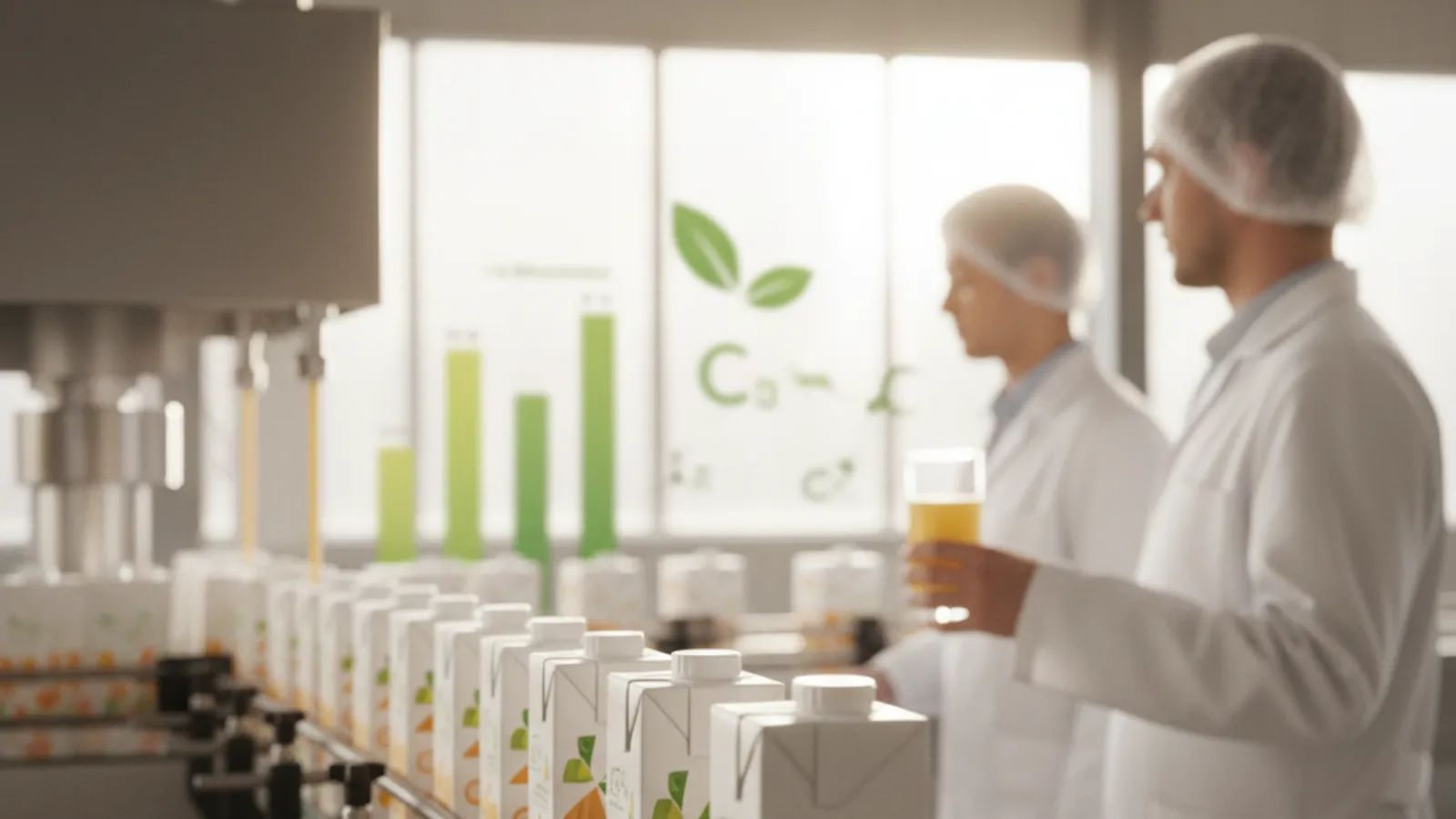
Most of the coverage reads this as a green packaging story. I read it as a format defence. SIG and LSDH have put the aluminium-free full barrier carton into commercial juice filling in Alsace. The French carbon saving reads 19%.
What SIG and LSDH agreed in Alsace
LSDH fills liquid food and drink for brands and for shops across France. The group packs milk, juice, cream and plant-based drinks. This work goes to JFA, its aseptic filling site in Alsace. JFA will now run SIG Terra Alu-free and Full Barrier cartons. The foil layer comes out and a thin polymer barrier goes in. The packs are aimed at juice, plant-based drinks and cream. First products are due on shelf before the end of 2026. LSDH says the change needs only minor work on the filling lines it already has. Shelf life holds at up to 12 months on suitable products and cleared line settings. That matters because the full barrier grade is the hard one to deliver. A plain alu-free carton will not hold an oxygen-sensitive drink for a year. Juice, oat drinks and cream fade without a guard against oxygen, light and aroma loss. Milk is far more forgiving, which is why milk went first.
The carbon number moves with the market
Three savings now sit against the same material. A French study of the pack puts the saving at 19% against a standard aseptic carton. A German juice pack was reported at 29% last year. SIG's own headline figure reaches up to 61% where forest-based polymers are used. The reason is simple. A study of this kind rests on the power grid, the pack size and the boundary drawn around it. Change the country and the grid behind the board changes with it. Change the polymer and the top number moves again. The two firms said as much themselves. They told the trade that the 61% figure covers other material mixes and other boundaries. So a saving is a local result rather than a property of the carton. A brand that signs on the headline will book a number it never gets. A board maker that quotes the headline into a tender invites a challenge later.
The filler decided this rather than the material
JFA was an aseptic site long before this deal. Krones built it a dry aseptic PET line in 2016. That line runs at up to 30,000 bottles an hour on juice and smoothies. Preforms are cleaned with hydrogen peroxide gas, so the line uses no water in production. A site like that already holds test rigs, trained crews and a quality file. That happens because a new pack material has to be proven on the machine that fills it. The filler signs off the seal, the sterile zone and the shelf life together. Each product and each line needs its own sign-off. A low acid juice is a different test from a cream. So the pace of this grade is set by test work rather than by new spending. A board mill can make the material long before a brand is allowed to sell it. The tight step has moved from the mill to the laboratory.
The grade itself is not new. SIG launched the aluminium-free full barrier for multi-serve cartons in May 2025. A German retailer took the first juice packs that July. A Slovenian dairy followed with low-fat milk in February this year. Each of those was one brand on one pack. France brings a contract filler, and a contract filler serves many brands at once.
The categories a full barrier opens up
Zenith's Global Aseptic Packaging Market Report 2026 sets the frame around this. Beverages are now the largest use of aseptic filling at 60,180 million litres. UHT white milk sits behind them at 52,711 million litres. Beverage family cartons are shrinking about 1.0% a year while large PET grows above 5%. So the carton is losing ground in the category it most needs to hold. That matters because juice, plant-based drinks and cream count as beverage volume rather than milk volume. A full barrier grade is the only aluminium-free option those drinks can use. The milk carton never needed one in the same way. So this launch lands exactly where the carton is under attack from the bottle. A greener carton gives a juice brand a reason to stay in board. Without that reason the next pack review points at PET.
West Europe is the hardest place to win carton volume
The region it lands in is not growing. Zenith puts West European aseptic volume at 27,191 million litres. That volume has been falling about 1.0% a year. Aseptic beverages in the region run at 8,759 million litres. World juice and nectar output is in slow decline at 33,725 million litres. The mechanism is worth stating plainly. In a flat market a new pack grade cannot create volume for anyone. It can only move volume from one supplier to another. Every French juice line that takes this board takes it off a rival grade. So the prize is a share of an installed base. That makes the win cheaper to defend and slower to find. It also raises the value of a contract filler. One cleared line at a co-packer can carry work from several brands at once.
The Zenith read on where this grade lands first
We think this grade becomes the standard European juice and plant-based carton first. The milk carton follows some years later. The reason is commercial rather than technical. A juice carton is fighting a PET bottle for the same shelf, so it needs a fresh argument. A European milk carton is not under that pressure today. The figure we watch is the count of cleared filling lines a supplier can name in one market. Five named French sites inside two years would make this grade a default. One site and a press release would not. That matters because a buyer wants a pack from two suppliers and several lines. Single sourcing a pack is how a launch gets delayed. Our opening claim settles here. This is a defence of the carton in beverages. The carbon figure is how that defence gets sold to a brand.
Fillers and converters now face one commercial issue. How much carton volume can a barrier grade actually defend? That answer sits in the pack data rather than in a launch notice. Our Global Aseptic Packaging Market Report 2026 splits world volume by category, pack type and pack size. It covers 39 markets with 2025 actuals. Forecasts run to 2030.
Going deeper on this market? See the Global Aseptic Packaging Market Report 2026.
Cheese Market Sizer
Size any of 48 cheese markets: 2025 consumption, kg per person, your market share and headroom.
Open free tool
Global Cheese Database 2026
Production, imports, exports and consumption for 39 cheese types across 48 countries, with actuals through 2025 and forecasts to 2030. Buy one market or any five with a single-user, departmental or corporate licence, or get your free database and report sample first.
Get your free database & report sampleStrategic Insights
📊 Analytics & Strategic Insight
A barrier grade is a share weapon in beverages, and the carbon figure is the sales line
The decision most in this industry are avoiding:
👉 The win here is the contract filler rather than the brand. A co-packer clears a material once and then offers it to every customer on that line. That spreads a grade faster than any single brand launch can.
👉 Carbon studies are being read as if they were product specifications. A result is tied to one country, one pack and one boundary. Two markets running the same board will publish different savings, and both will be right.
👉 The aluminium-free story has been told as a milk story and the volume is in beverages. Zenith has beverages at 40.6% of world aseptic volume against 35.5% for UHT white milk. The grade that fits beverages is the one that matters commercially.
Here's the full context:
→ May 2025: SIG launches its aluminium-free full barrier material for multi-serve aseptic cartons.
→ July 2025: Aldi sells Rio d'oro grape juice in the new one litre pack in parts of Germany.
→ February 2026: Pomurske Mlekarne puts Slovenian low-fat milk into the same grade.
→ September 2026: SIG says it has reached 85% paper content in its aseptic cartons.
→ Most recent: SIG and LSDH took the grade into French juice filling. The site is JFA in Alsace.
What this means for aseptic fillers, converters and equipment suppliers:
✅ The line planner at a contract filler carries the whole test load. Every product needs its own sign-off on seal, sterile zone and shelf life. Build that calendar before the sales team promises a date.
✅ The packaging buyer at a juice brand has a second question to ask now. How many lines in this country are already cleared to run the board? A grade with one cleared line is a single source.
✅ The board maker's trade desk should quote the local study rather than the headline. Cartons hold 66.5% of world aseptic volume, so the buyers are experienced and will check. A withdrawn claim costs more than a smaller one.
What this means for market decisions:
1️⃣ West Europe filled 43,156 million aseptic packs in 2025 and is not adding more. That makes this grade a defensive move in the region rather than a growth one. Judge it on share held rather than on volume created.
2️⃣ SIG gains most where the filler is already its customer. A rival carton house has to displace a cleared line, which costs time it cannot buy. Read the installed fleet before reading any share table.
3️⃣ Anyone entering European ambient beverages should count cleared lines before choosing a pack. The format question is settled by what a co-packer can run this year. A format with no local filler is a plan rather than a route.
The Zenith view:
This proves a French contract filler will run the grade commercially. It does not prove the grade defends carton share against the bottle. The figure that settles it is the beverage split between cartons and large PET at the next count. Zenith has large PET at 25,940 million litres against 14,500 million for beverage family cartons. A barrier grade that fails to close that gap is a cost story rather than a share story.
The data behind this story
📦 Global Aseptic Packaging Market Report 2026
148.4 billion litres and 344 billion packs across 39 markets, split by category, pack type and pack size, with 2025 actuals and forecasts to 2030. A free 40-page sample is on the page.
→ Read the free sample
Assessing an aseptic filling market or a pack format? Zenith helps food and beverage companies assess market size, growth, competitors, pricing and route to market before they invest.
→ Discuss your market
Zenith Consulting
Submit your food & beverage project enquiry.
Share your requirements. If there is a strong fit, we’ll come back with an indicative investment range, project timeline and recommended strategic approach.
Reviewed by Zenith Consulting’s senior food & beverage strategy team.
Our market reports
All reports and databases Available now
Global Aseptic Packaging Market Report 2026
39 markets, 2025 actuals and forecasts to 2030 by category, region and pack type.
View report- Available now
Global Cheese Database 2026
48 markets and 39 cheese types: production, trade and consumption to 2030.
View report  Available now
UK Water Drinks Reports 2026
Plain, flavoured and functional water in the UK: companies, brands, own label and forecasts to 2030.
View report Register interest
Global Water Database 2026
Packaged, bulk, flavoured and premium water in 86 markets, to 2030.
View report Register interest
Global Premium Bottled Water Report 2026
Premium water volume, value and brands, with six country deep dives.
View report Available now
Global Water Dispense Market Reports 2026
Coolers, dispensers and operators across 35+ markets, with forecasts to 2030.
View report- Free tool
Cheese Market Sizer
Size any of 48 cheese markets: 2025 consumption, kg per person, your market share and headroom.
Open free tool
Related analyses
- Health, Nutrition & Functional
Leprino's 35 Million Dollar Lubbock Whey Expansion Will Finish Other Cheese Makers' Protein
Leprino Nutrition has completed a 35 million dollar expansion at Lubbock, Texas, quadrupling its microparticulated whey capacity. The new line will finish whey solids bought in from other cheese makers, which moves the tight step in the chain away from the vat.
Read analysis → - Health, Nutrition & Functional
Cheese Gets $3.76 Billion Of A $15 Billion US Dairy Build-Out While Milk And Cream Take $5.63 Billion
United States dairy firms are building more than $15 billion of new plant capacity across 23 states. Cheese holds $3.76 billion of it, and milk and cream have overtaken cheese at $5.63 billion.
Read analysis → - Health, Nutrition & Functional
West Europe Aseptic Volume Falls To 27.2 Billion Litres While Pack Numbers Return To Growth: UHT Milk Drops 2.1% A Year
West Europe filled 27,191 million litres of aseptic product in 2025. It is the only region falling on litres both to 2025 and to 2030, yet its pack count returns to growth by 2030.
Read analysis →
Share it with your peers
Pass this analysis to colleagues who track the food and beverage market.
Zenith Market Intel
Need a specific food or beverage market report?
Tell us which category, region or question would be useful for your team.
Sister Publication
Also follow our Water Dispense Market Intelligence
Category analyses, operator briefings, and investor signals across the global water dispense market.