SIG Sets A 20% Aseptic Carton Margin Target And Writes Down The Rest Of The Portfolio
SIG has raised its margin guidance, set a mid-term aseptic carton target above 20% and booked a charge of about 250 million euros against everything else. Zenith's data puts the world aseptic market at 344 billion packs, so the growth SIG has promised has to be taken from somebody else's lines.
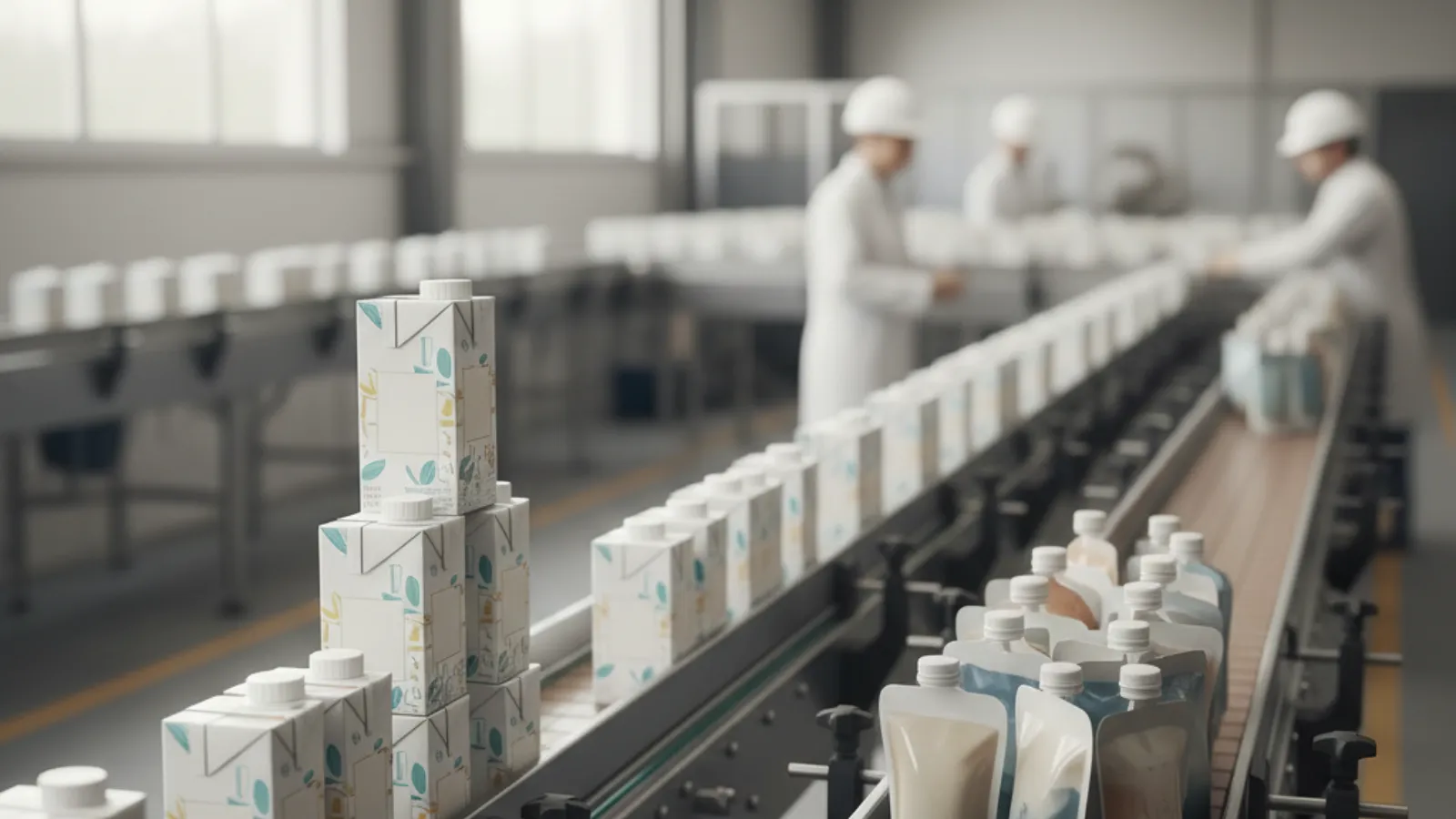
I read the margin target first and shrugged. Then I saw what SIG is writing off to reach it. The group will book a charge of about 250 million euros in the fourth quarter. That charge falls on the parts of the business that do not make aseptic cartons.
A strong quarter, and a raised margin
SIG reported third-quarter revenue of 843.0 million euros on 27 October. Growth was 7.2% at constant currency. That measure strips out the exchange rate, so it shows what the plants actually shipped. The adjusted EBIT margin came in at 17.4%. Management then raised the full-year margin range to 16.0 to 16.5% and left the revenue range alone. That pairing is the signal. The reason is simple. A carton plant carries most of its cost whatever it runs. Printing, laminating and cutting lines are paid for by the year. So an extra sleeve through a line that is already open costs very little to make. Margin can climb on the same litres. It can also climb on cheaper board and resin, and on fewer people. None of that needs a single new customer.
The carton is now the whole company
From this year SIG reports two segments. Aseptic carton is one. Bag-in-box and spouted pouch is the other. Chilled carton disappears into that second line and carries part of the write-off with it. The nine-month figures show why. Aseptic carton revenue reached 1,913.3 million euros and grew 4.2%. Bag-in-box and spouted pouch fell 4.4%. That happens because the shrinking lines sell into markets with a low barrier. Any converter with a laminator and a slitter can quote for a pouch. An aseptic carton is different. The sleeve only fits one maker's filler, and that filler is already bolted to the customer's floor. Changing supplier means changing the machine. A segment change is more than housekeeping. It resets how money is handed out inside the group and what the managers are measured on. The charge follows the same logic. Goodwill is carried against what a unit is expected to earn. Re-cut the unit, lower the outlook, and the carrying value no longer stands up.
Growth came from the newer markets
The regional split is sharper than the headline. India, the Middle East and Africa grew 18.2% in the quarter while Europe barely moved. The Americas grew 9.3%. Across nine months Europe fell 1.0%. Here is why that matters. A filler placed in a growing market runs more hours every year after it goes in. A filler placed in a flat market only ever earns what the brand already sells. Sleeve demand follows the fleet. Europe has not lost the technology. The work there is replacement. Most European work now is swapping aluminium out of the layers and renewing machines that are already there. That protects the volume. It does not add any. New fillers are going into markets where ambient milk and juice are still winning shelf space.
Three to five percent in a market that grows far slower
The mid-term plan asks for organic revenue growth of 3 to 5% a year. Zenith's Global Aseptic Packaging Market Report 2026 puts the world aseptic market at 344 billion packs in 2025. That market grew 1.4% a year over the five years to 2025. The forecast to 2030 keeps it close to the same pace. SIG filled about 54 billion packs last year. That is roughly one aseptic pack in six. So the arithmetic is plain. A packaging supplier has only three ways to beat its own market. It can raise prices. It can shift customers to packs that carry more value each. Or it can take a line off a rival. The first is hard while board and resin are soft. The second is real and slow. The third is the only lever that moves the number quickly, and it is the hardest one to pull. Cartons already hold 66.5% of world aseptic volume, so the share is there to be taken.
Where a 20% margin is actually found
The margin promise rests on the installed fleet. The mechanism is simple. A carton maker sells the filler cheaply, and sometimes places it for nothing. It then earns on every sleeve that machine eats for the next ten years. So the money is made after the sale, line by line, season after season. That is why machine speed and changeover time sit on the supplier's own revenue line. Brands keep adding sizes and flavours, so runs get shorter and stops get more frequent. Every stop is an hour nobody is paid for. SIG's Neo range, launched at the start of October, was built for that arithmetic. The cash to keep placing machines is now there as well. Net capital spending fell to 6.3% of revenue across nine months. Free cash flow turned positive at 59.0 million euros after an outflow a year earlier. Net debt eased to 2.6 times earnings. A supplier funding placements from its own cash can price a machine to win the floor. A supplier that cannot has to charge for the hardware and lose the sleeves.
The Zenith read on the plan
We think SIG gets the margin and lands near the bottom of its growth range. The plan asks for more than 20% on aseptic carton. Those levers sit inside the factory and inside the filler, and SIG controls both. Growth is a different animal. SIG itself puts underlying aseptic carton market growth at 2 to 3%. Beating that means taking a live line off a rival. Those decisions move slowly, because a filler is chosen once and lived with for years. A brand only reopens the question when the machine is worn out or the pack has to change. So the figure we watch is filling-machine placements by region. Placements lead sleeve revenue by two or three years, which makes them the early warning. If placements outside Europe keep running ahead, the growth half of the plan is real. If they flatten, the margin carries the story on its own.
This also raises a wider question about where aseptic growth actually sits, by market and by pack. That is one of the areas we track across the world aseptic packaging market. Our Global Aseptic Packaging Market Report 2026 covers 39 markets by category, pack type and pack size.
Going deeper on this market? See the Global Aseptic Packaging Market Report 2026.

Global Water Dispense Market Reports 2026
Coolers, dispensers and operators across 35+ markets, with forecasts to 2030.
More information
Global Cheese Database 2026
Production, imports, exports and consumption for 39 cheese types across 48 countries, with actuals through 2025 and forecasts to 2030. Buy one market or any five with a single-user, departmental or corporate licence, or get your free database and report sample first.
Get your free database & report sampleStrategic Insights
📊 Analytics & Strategic Insight
A supplier has just told the market which formats it will defend on price
The decision most in this industry are avoiding:
👉 The write-off is a pricing signal rather than an accounting one. Chilled carton and bag-in-box now sit in one segment with an 8 to 10% margin target. That tells every buyer which contracts SIG will fight for.
👉 The market read the guidance and missed the fleet. Traders fixed on an unchanged revenue range. The exposure sits in whether the installed fillers keep loading, because that is what funds the carton margin.
👉 Aseptic filling is draining the hot-fill pool, quietly. Zenith puts aseptic at 38.9% of 154.6 billion litres of ambient long-life beverages in 2025, rising to 40.0% by 2030. Hot filling gives up most of that ground.
Here's the full context:
→ 2016: SIG begins to outgrow the aseptic carton market, on its own account of the record.
→ 2018: Zenith publishes the fourth edition of its global aseptic packaging study.
→ 2025: SIG fills about 54 billion packs. World aseptic volume reaches 148.4 billion litres.
→ 1 October 2026: SIG launches the Neo aseptic carton filling range.
→ Most recent: SIG raises its margin guidance on 27 October. It books about 250 million euros against everything outside the aseptic carton.
What this means for aseptic fillers, converters and equipment suppliers:
✅ The carton buyer at a dairy group loses room. A supplier chasing a higher carton margin will not discount to hold a flat account. Price the renewal on that basis.
✅ The line planner at a juice filler gains an argument. Shorter changeovers alter the case for short runs. Work out what a format change costs you today in lost hours.
✅ The bag-in-box converter has been handed room. SIG will chase aseptic uses in that segment and take 8 to 10% on the remainder. Everything else there is open ground.
What this means for market decisions:
1️⃣ The aseptic pool grows slowly, and the growth is regional. Zenith's forecast carries world volume to 159.6 billion litres by 2030. The world average hides where that sits.
2️⃣ SIG has moved to the part of the market with the highest barrier. Rivals in chilled and flexible packs now face a supplier with less reason to defend price there.
3️⃣ Price any aseptic project off the installed filler base first. Zenith puts China alone at 17.9 billion litres of aseptic beverage volume, growing 8.5% a year.
The Zenith view:
This proves SIG can lift margin on a flat top line. It does not prove the carton market can fund the growth half of the plan. The figure that settles it is filling-machine placements by region. The March full-year report is where we look for it.
The data behind this story
📦 Global Aseptic Packaging Market Report 2026
148.4 billion litres and 344 billion packs across 39 markets, split by category, pack type and pack size, with 2025 actuals and forecasts to 2030. A free 40-page sample is on the page.
→ Read the free sample
Evaluating the aseptic packaging market? Zenith helps food and beverage companies assess market size, growth, competitors, pricing and route to market before they invest.
→ Discuss your market
Zenith Consulting
Submit your food & beverage project enquiry.
Share your requirements. If there is a strong fit, we’ll come back with an indicative investment range, project timeline and recommended strategic approach.
Reviewed by Zenith Consulting’s senior food & beverage strategy team.
Our market reports
All reports and databases Available now
Global Aseptic Packaging Market Report 2026
39 markets, 2025 actuals and forecasts to 2030 by category, region and pack type.
View report- Available now
Global Cheese Database 2026
48 markets and 39 cheese types: production, trade and consumption to 2030.
View report  Available now
UK Water Drinks Reports 2026
Plain, flavoured and functional water in the UK: companies, brands, own label and forecasts to 2030.
View report Register interest
Global Water Database 2026
Packaged, bulk, flavoured and premium water in 86 markets, to 2030.
View report Register interest
Global Premium Bottled Water Report 2026
Premium water volume, value and brands, with six country deep dives.
View report- Available now
Global Water Dispense Market Reports 2026
Coolers, dispensers and operators across 35+ markets, with forecasts to 2030.
View report
Related analyses
- Corporate Strategy & Portfolio
Aseptic Other Dairy Fills A Third Of The World's Packs On 27,177 Million Litres: Family Cartons Grow 6% A Year While Portion Cartons Stall
Aseptic other dairy filled 27,177 million litres and 115,532 million packs in 2025, a third of the world total. Family cartons grew 6.0% a year while portion cartons went backwards.
Read analysis → - Corporate Strategy & Portfolio
US Cheddar Blocks Rally 42.75 Cents In Four Weeks While Milk Output Climbs 2.7%: American Cheese Stocks Fall To 792 Million Pounds
US farms in the major states made 18,724 million pounds of milk in September, up 2.7%. Cheddar blocks still rose 42.75 cents in four weeks, while American cheese stocks fell.
Read analysis → - Corporate Strategy & Portfolio
FDA Clears Salt Substitutes In 41 Cheese Standards, And The Last Sodium Push Moved The Median Just 3%
The FDA has opened 41 cheese standards to salt substitutes, with the rule effective 14 December 2026. The cheese part can still be objected to until 12 November, and the last US sodium push moved the median by 3%.
Read analysis →
Share it with your peers
Pass this analysis to colleagues who track the food and beverage market.
Zenith Market Intel
Need a specific food or beverage market report?
Tell us which category, region or question would be useful for your team.
Sister Publication
Also follow our Water Dispense Market Intelligence
Category analyses, operator briefings, and investor signals across the global water dispense market.