Tetra Pak Completes 30.2 Million Euro La Rioja Upgrade As Argentina's Only Aseptic Carton Plant Looks To Chile
Tetra Pak has finished a 30.2 million euro upgrade at La Rioja, the only aseptic carton converting plant in Argentina, with capacity for 3.5 billion packs a year. About 40% of its output is exported, mostly to Chile, where aseptic demand is growing faster than in Argentina.
I will say this plainly. Tetra Pak's latest money in Argentina is a bet on its neighbours more than on Argentina. The company has finished a 30.2 million euro upgrade at its La Rioja carton plant. The plant can make 3.5 billion carton packs a year. About 40% of its output leaves the country, mostly for Chile. My view is that the export share now decides how busy that plant stays.
Tetra Pak finishes its La Rioja upgrade
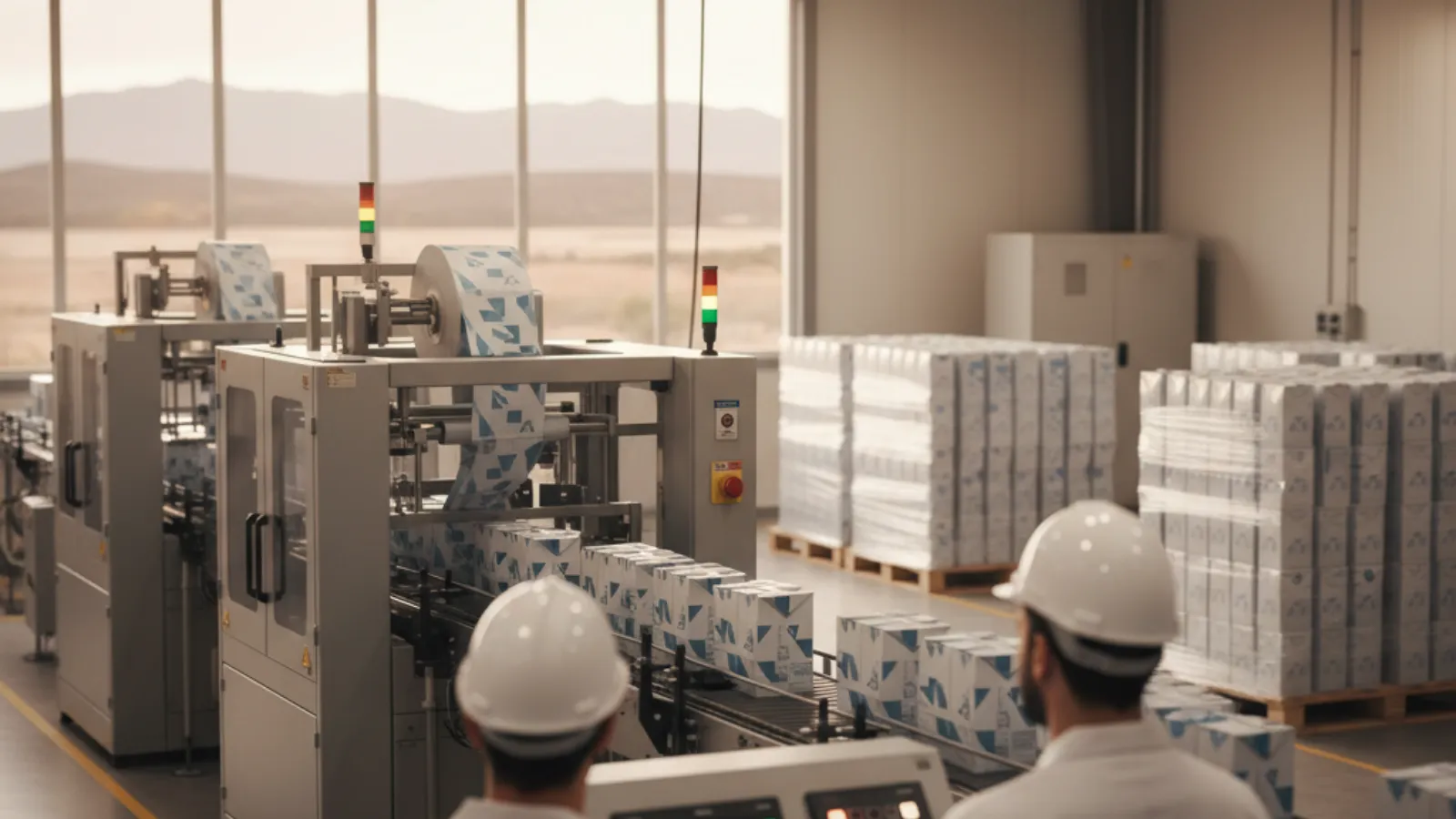
Tetra Pak confirmed this week that the plan is complete, as the plant marks 40 years in the province. The plan began in 2022. Its main piece is a new printing press with more automation. Tetra Pak says the press lifts print quality, output and safety. The La Rioja plant does not fill any milk or juice itself. It prints, laminates and cuts carton material onto reels. The dairy's own filling machine then forms, fills and seals each pack. That matters because the reel is made for one supplier's filling system. A dairy running Tetra Pak fillers cannot simply switch to a rival's reels. Whoever makes the reels sets the pace for every filler that runs them. Tetra Pak says it delivers to Argentine customers within a week. It employs about 400 people in the country, around half of them at the plant.
One carton plant for Argentina, none in Chile
Zenith's Global Aseptic Packaging Market Report 2026 names La Rioja as the only aseptic carton converting plant in Argentina. Chile has no such plant at all. Every aseptic carton a Chilean dairy fills starts as imported material. It comes from La Rioja, from Tetra Pak's plants in Brazil, or from Europe. Chile filled 645 million litres of product aseptically in 2025. That took about 1.16 billion packs. Cartons carry 96% of that volume. Here is why the export share matters so much. A printing press earns its keep only when it runs without long breaks. Chilean dairies are the second customer that keeps those presses busy. Uruguay and Paraguay take smaller amounts on top. La Rioja province borders Chile, so the material has a short trip compared with a shipment from Europe.
Argentina's own carton demand has stopped growing
The home market explains why exports now carry the growth. Argentina filled 1.53 billion litres of product aseptically in 2025. That came in about 2.02 billion packs. White milk is 69% of the volume. Zenith forecasts growth of only 0.9% a year to 2030. The reason is simple. Argentine homes have already made their big switch. Most fluid milk used to be sold chilled, much of it in plastic sachets. Today most of it is sold in ambient cartons. Those cartons travel to the interior without a cold chain. That shift kept the presses full for years, and it is now largely done. Suppose the plant runs close to its stated capacity. Then the share it keeps at home is about 2.1 billion packs. That is close to what Argentine fillers used in 2025. The home share of the plant already matches the home market. Any extra output has to find a buyer abroad.
The paperboard still comes from abroad
The upgrade added printing power. It did not add a paperboard mill. Zenith's report notes that Argentina imports all of its liquid packaging board. That board is the thick base layer of every carton. That happens because only a small number of mills in the world make this grade. The risk showed up between October 2022 and December 2023. In that period Argentina required import licences under its SIRA system. A delayed board shipment meant a delayed run of cartons. A local press shortens the wait, but it cannot remove the board import. For a Chilean dairy, the material crosses two borders before its filler starts. The board travels to Argentina first, and the printed reels then travel to Chile. The new press makes the middle step faster. The rest of the chain is as long as before.
Chile is the faster market for packs
Chile is where the extra packs have the best chance of selling. Zenith's report shows Chile grew fastest in Latin America over the five years to 2025, at 2.3% a year. It forecasts 697 million litres for Chile by 2030. Chilean packs are also smaller. The average Chilean aseptic pack holds 554 ml. The Argentine average is 759 ml. That gap exists because Chile fills more small packs, including milk for schools. Smaller packs matter a great deal to a carton plant. A converter sells packs, so a litre in small packs means more work on the press. One litre in Chile needs close to two packs. In Argentina the same litre needs about 1.3. So Chilean demand weighs more on the press than its litres suggest.
The Zenith read: exports carry La Rioja's growth to 2030
We think the export share at La Rioja rises over the next five years, from about 40% toward half. The evidence is the gap in growth between the two markets. Argentina's forecast is 0.9% a year. Chile's is 1.6% a year, and in more packs for each litre. That matters because a plant adds shifts where demand grows. Argentine demand also looks soft right now. Zenith's report notes that domestic dairy sales in January were 5.6% below a year earlier. We expect Tetra Pak to fill any new press time with export orders first. The figure that would change our call is Argentine dairy sales. A clear return to growth would pull more packs back home. A new carton plant inside Chile would change the call too. It would cut La Rioja out of its biggest export market.
For dairies and suppliers in the Southern Cone, this raises a plain commercial issue. Where will the next packs be made, and for which market? One plant now serves two countries with very different growth paths. Our Global Aseptic Packaging Market Report 2026 splits Argentina and Chile by category, pack type and pack size. It shows where those packs will be needed by 2030.
Going deeper on this market? See the Global Aseptic Packaging Market Report 2026.
Global Water Database 2026
Packaged, bulk, flavoured and premium water in 86 markets, to 2030.
More information
Global Cheese Database 2026
Production, imports, exports and consumption for 39 cheese types across 48 countries, with actuals through 2025 and forecasts to 2030. Buy one market or any five with a single-user, departmental or corporate licence, or get your free database and report sample first.
Get your free database & report sampleStrategic Insights
📊 Analytics & Strategic Insight
La Rioja's growth sits across the border
The decision most in this industry are avoiding:
👉 The threat at home is the pouch rather than a rival carton. Argentine UHT milk in plastic pouches reached 47.2 million litres in 2025, from nothing in 2020. Family cartons of white milk slipped 1.4% on the year.
👉 One dairy group now holds most of the buying power. La Serenisima holds more than 58% of Argentine fluid milk. Arcor and Danone took full control of it this year.
👉 SIG already ships carton sleeves to Argentina from Brazil. It has no Argentine plant. A faster local press is partly a defence against that import route.
Here's the full context:
→ 1986: Tetra Pak opens La Rioja, now the only aseptic carton converting plant in Argentina.
→ 2022: Tetra Pak starts a 30.2 million euro plan to modernise the plant.
→ 2023: Import licences under SIRA slow paperboard shipments until December.
→ 2025: Chile fills 645 million litres aseptically, all in imported carton material.
→ Most recent: Tetra Pak says the La Rioja upgrade is complete. About 40% of output is exported.
What this means for aseptic fillers, converters and equipment suppliers:
✅ The Chilean dairy buyer should map where each reel comes from. Customs records show material from Argentina, two Brazilian plants and Europe.
✅ The Argentine line planner should budget for more plastic packs. Ambient white milk in PET bottles reached 42.0 million litres in 2025.
✅ Equipment sellers should watch Chilean UHT lines. Surlat added an 8 million dollar UHT line in Chile in 2025.
What this means for market decisions:
1️⃣ Latin America is a slow but very large aseptic market. It filled 19.7 billion litres in 2025, third behind China and West Europe.
2️⃣ Brazil sets the pace for the region. It filled 9,179 million litres, more than half of the regional model.
3️⃣ A second converter in the Southern Cone would have to sell into both countries. Neither home market alone grows fast enough to fill a new plant.
The Zenith view:
This proves Tetra Pak is investing to stay the main source of carton material for both countries. It does not prove the extra output will sell. The figure that settles it is Chile's aseptic volume for 2026. Growth near our forecast would fill the new press time.
The data behind this story
📦 Global Aseptic Packaging Market Report 2026
148.4 billion litres and 344 billion packs across 39 markets, split by category, pack type and pack size, with 2025 actuals and forecasts to 2030. A free 40-page sample is on the page.
→ Read the free sample
Weighing a dairy or carton move in Argentina or Chile? Zenith helps food and beverage companies assess market size, growth, competitors, pricing and route to market before they invest.
→ Discuss your market
Zenith Consulting
Submit your food & beverage project enquiry.
Share your requirements. If there is a strong fit, we’ll come back with an indicative investment range, project timeline and recommended strategic approach.
Reviewed by Zenith Consulting’s senior food & beverage strategy team.
Our market reports
All reports and databases Available now
Global Aseptic Packaging Market Report 2026
39 markets, 2025 actuals and forecasts to 2030 by category, region and pack type.
View report Available now
Global Cheese Database 2026
48 markets and 39 cheese types: production, trade and consumption to 2030.
View report Available now
UK Water Drinks Reports 2026
Plain, flavoured and functional water in the UK: companies, brands, own label and forecasts to 2030.
View report- Available now
Global Water Database 2026
Packaged, bulk, flavoured and premium water in 86 markets, to 2030.
View report  Available now
Global Premium Bottled Water Report 2026
Premium water volume, value and brands, with six country deep dives.
View report Available now
Global Water Dispense Market Reports 2026
Coolers, dispensers and operators across 35+ markets, with forecasts to 2030.
View report- Free tool
Cheese Market Sizer
Size any of 48 cheese markets: 2025 consumption, kg per person, your market share and headroom.
Open free tool
Related analyses
- M&A, Investment & Valuation
Why the Arla-DMK Merger Will Define European Dairy for the Next Decade (Four Days to a Decision)
On 28 May 2026, the European Commission must decide whether to approve the merger of Arla Foods and DMK Group — a deal that would create Europe's largest dairy cooperative with €19 billion in revenue and 12,200 farmer-members. The two cooperatives have declined to offer any remedies, placing an unconditional bet on Brussels at a moment when European dairy's structural contraction makes consolidation feel less like a choice and more like arithmetic.
Read analysis → - Health, Nutrition & Functional
West Europe Aseptic Volume Falls To 27.2 Billion Litres While Pack Numbers Return To Growth: UHT Milk Drops 2.1% A Year
West Europe filled 27,191 million litres of aseptic product in 2025. It is the only region falling on litres both to 2025 and to 2030, yet its pack count returns to growth by 2030.
Read analysis → - Market & Category Growth
US Cheese Warning Labels Move Closer: Bongards Adds 180 Million Pounds Of Process Cheese Anyway
A US Senate committee has advanced a bill that would put a front-of-pack warning on whole milk, all cheese and most yogurt. Bongards is still spending $135 million on 180 million pounds more process cheese, and the channel split explains why.
Read analysis →
Share it with your peers
Pass this analysis to colleagues who track the food and beverage market.
Zenith Market Intel
Need a specific food or beverage market report?
Tell us which category, region or question would be useful for your team.
Sister Publication
Also follow our Water Dispense Market Intelligence
Category analyses, operator briefings, and investor signals across the global water dispense market.