Saputo Puts 600 Million Canadian Dollars Into Cottage Cheese And Cream Cheese As The Fresh Cheese Race Heats Up
Saputo will spend 600 million Canadian dollars on cottage cheese, cream cheese and high protein dairy as US cottage curd output climbs at double digit rates. US cream cheese output is falling, so that half of the bet may be about balancing the milk as much as chasing shoppers.
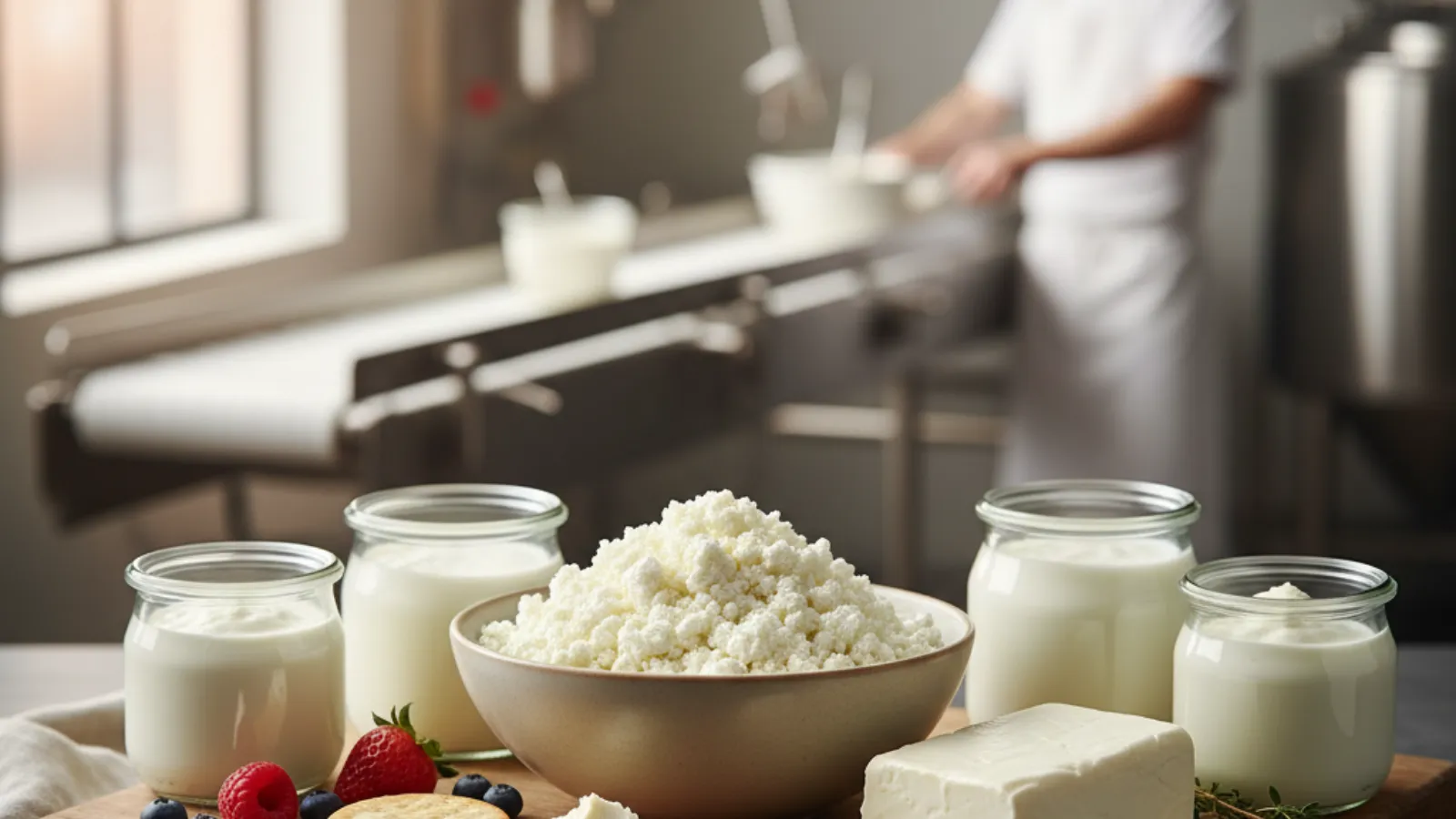
The one thing I keep asking cheese makers is where their next tonne of growth comes from. Saputo has now given its answer. It will spend 600 million Canadian dollars on more cottage cheese, cream cheese and high protein dairy. I read that as a bet on fresh cheese made close to the shopper. The commodity blocks that built the group are not where the new money goes.
What Saputo announced, and what it left out
Saputo published the plan on 19 November. The money goes into cottage cheese, cream cheese, functional drinks and other high protein products. Building and equipment work starts in fiscal 2027 and 2028. Saputo's fiscal year ends in March. The company expects the spend to start paying back in fiscal 2029. At full use, it puts the gain at about 140 million Canadian dollars a year. That is earnings before interest, tax and depreciation. Some parts of the plan still need permits. Saputo named no plants, no tonnes and no split of the money by product. That matters because the size of the cheese bet is still hidden inside the total. Cottage cheese and cream cheese are the two cheese lines named in the release. Chief executive Carl Colizza said the group sees strong demand for cultured dairy, high protein products and functional drinks.
Cottage cheese is the fastest growing cheese line in America
The US numbers explain the timing. US plants made 233,300 tonnes of cottage cheese curd in 2025 (514 million pounds). That was 14.7% more than in 2024, says the US Department of Agriculture (USDA). Total US cheese output rose 4.0% over the same year. Cottage curd grew more than three times as fast as cheese as a whole. The run has not slowed. In September 2026, curd output was 12.8% above a year earlier. Here is why. Cottage cheese packs a lot of protein into a cheap tub with little fat. High protein diets and weight loss drugs have pushed shoppers toward that profile. A tub of cottage cheese now competes with protein bars and yoghurt drinks for the same snack.
Fresh cheese has to be made near the people who eat it
Cottage cheese is a fresh cheese. It is sold young and keeps for weeks rather than months. The mechanism is shelf life. A tub cannot sit on a ship for a month and still sell. So fresh cheese is mostly made in the country where it is eaten. That turns a demand boom into a race for local plant space. A cheddar maker can ship blocks across an ocean to meet demand. A cottage cheese maker has to build near its shoppers. The process differs too. Cottage curd is set with acid and cultures from skim milk. It is then cut, cooked and washed. A cheddar vat cannot simply switch to it. New lines, culture rooms and cold chains are needed. So growth in this cheese shows up as building work rather than as trade.
Cream cheese is the harder half of the bet
Cream cheese tells a different story. US output of cream and Neufchatel cheese fell 1.5% in 2025, to 516,600 tonnes. September 2026 output was 2.7% lower than a year earlier. Saputo is adding cream cheese capacity while US output of it is shrinking. That happens because cream cheese may play a different role in the plan. The two products use opposite halves of the milk. Cottage curd is made from skim milk. Cream cheese is built on cream. A group that grows cottage cheese fast is left with spare cream. Cream cheese is one of the best homes for it. Our reading is that the cream cheese spend is partly about balancing the milk. Any new tonnes will also have to win share from rivals. The pool itself is not growing.
Saputo is joining a crowded fresh cheese race
Rivals see the same demand. Canadian co-op Gay Lea Foods announced more than 200 million Canadian dollars for cottage cheese earlier in 2026. In the US, AMPI turned its cheddar plant at Blair over to cottage curd. The hard cheeses are growing far more slowly by comparison. US mozzarella output rose 4.5% in 2025, and cheddar rose 5.8%. The cheese industry is moving money from the vat to the tub. That gap exists because the margins differ. Blocks and barrels trade as commodities, priced off public markets. A branded tub of cottage cheese earns a shelf price set in the shop. Saputo knows the block side well. In its latest quarterly results, its US arm said a weak spread between milk and cheese prices hurt margins. Fresh cheese gives it a way to earn more from the same milk.
The Zenith read: the cottage boom is a North American story
We think the cottage cheese race is mostly a North American story. Zenith's Global Cheese Database 2026 puts fresh cheese, mozzarella included, at over a third of consumption across its 48 markets. It is also the fastest growing family, at about 2.4% a year to 2030. That is healthy growth. It is still far below the double digit pace of US cottage curd. The reason is simple. Fresh cheese demand grows with the number of shoppers. The US surge rides one diet trend. The figure that would change our call is US cottage curd growth in 2027. If output still grows above 10% a year when Saputo's lines start, the new space meets a short market. If growth slows toward the fresh cheese average, the new plants will fight over the same shoppers. We expect the second case by 2028. Branded makers should hold their price, and own label tubs will take the strain.
One plant plan rarely shifts a global market by itself. What matters is whether similar fresh cheese plants appear across countries. Our Global Cheese Database 2026 tracks fresh cheese, cottage and cream cheese included, in tonnes for every market it covers.
Going deeper on this market? See the Global Cheese Database 2026.

Global Water Dispense Market Reports 2026
Coolers, dispensers and operators across 38 markets, with forecasts to 2030.
More information
Global Cheese Database 2026
Production, imports, exports and consumption for 39 cheese types across 48 countries, with actuals through 2025 and forecasts to 2030. Buy one market or any five with a single-user, departmental or corporate licence, or get your free database and report sample first.
Get your free database & report sampleStrategic Insights
📊 Analytics & Strategic Insight
Fresh cheese is pulling money away from the commodity vat
The decision most in this industry are avoiding:
👉 The cream cheese spend may be about cream more than demand. A fast cottage line leaves fat behind. Cream cheese and butter are the two big homes for it, and only one carries a brand.
👉 The cottage boom makes a harder whey than the cheese it replaces. Acid curd leaves acid whey, which is harder to sell than sweet cheddar whey. Plants need a plan for it before they build.
👉 Own label tubs are the weak spot if growth slows. A shop can switch its own label cottage supplier in one tender. A branded maker keeps its shelf.
Here's the full context:
→ 2025: US cottage curd output rises 14.7%, more than three times the pace of all cheese.
→ Early 2026: Gay Lea Foods commits more than 200 million Canadian dollars to cottage cheese.
→ September 2026: US curd output runs 12.8% above a year earlier. Cream cheese output falls 2.7%.
→ Early November 2026: Saputo reports a weak milk to cheese spread in its US cheese business.
→ Most recent: Saputo commits 600 million Canadian dollars to fresh cheese and protein. Building starts in fiscal 2027.
What this means for cheese producers, traders and buyers:
✅ The cottage cheese buyer should lock in supply before the new lines arrive. New space is two to three years away. Until then, makers with spare room set the terms.
✅ The plant planner should cost acid whey before signing for a cottage line. Disposal or drying can change the return on the whole project.
✅ The cream cheese sales team should expect sharper pricing from new tonnes. Extra volume into a flat pool usually comes with discounts to win shelf space.
What this means for market decisions:
1️⃣ North American cottage cheese is the most attractive cheese line right now. Demand still runs ahead of plant space, and imports cannot fill the gap.
2️⃣ Groups with spare skim milk and a strong brand gain most. Block makers without fresh lines carry the weak spread alone.
3️⃣ An entrant should test the diet trend before building for it. Ask how much of the growth comes from repeat buyers rather than first trials.
The Zenith view:
This proves Canada's largest dairy group sees fresh cheese as its best growth for the rest of the decade. It does not prove US cottage demand keeps its current pace. The figure that settles it is USDA cottage curd output for 2027, published in spring 2028. If growth is still in double digits then, the new lines arrive into a short market.
The data behind this story
🧀 Global Cheese Database 2026
Production, imports, exports and consumption for 39 cheese types across 48 countries, in tonnes, with actuals to 2025 and forecasts to 2030. Country workbook plus market insights dossier, delivered by Akos Petri, with a free sample country chapter on the page.
→ See the database
Weighing a fresh cheese plant or a cottage cheese market entry? Zenith helps food and beverage companies assess market size, growth, competitors, pricing and route to market before they invest.
→ Discuss your market
Zenith Consulting
Submit your food & beverage project enquiry.
Share your requirements. If there is a strong fit, we’ll come back with an indicative investment range, project timeline and recommended strategic approach.
Reviewed by Zenith Consulting’s senior food & beverage strategy team.
Our market reports
All reports and databases Available now
Global Aseptic Packaging Market Report 2026
39 markets, 2025 actuals and forecasts to 2030 by category, region and pack type.
View report Available now
Global Cheese Database 2026
48 markets and 39 cheese types: production, trade and consumption to 2030.
View report Available now
UK Water Drinks Reports 2026
Plain, flavoured and functional water in the UK: companies, brands, own label and forecasts to 2030.
View report Available now
Global Water Database 2026
Packaged, bulk, flavoured and premium water in 86 markets (44 on sale now), to 2030.
View report Available now
Global Premium Bottled Water Report 2026
Premium water volume, value and brands, with six country deep dives.
View report- Available now
Global Water Dispense Market Reports 2026
Coolers, dispensers and operators across 38 markets, with forecasts to 2030.
View report - Free tool
Cheese Market Sizer
Size any of 48 cheese markets: 2025 consumption, kg per person, your market share and headroom.
Open free tool
Related analyses
- M&A, Investment & Valuation
Müller Closes Sachsenmilch Semi-Hard Cheese Dairy At Leppersdorf: Mozzarella And Acid Curd Lines Stay
Müller will close the semi-hard cheese dairy at Sachsenmilch Leppersdorf on 31 December 2026, with about 160 staff affected. Mozzarella and acid curd cheese carry on at a site that takes 1.7 billion kg of milk a year.
Read analysis → - M&A, Investment & Valuation
Chobani's $1.2bn Allentown Plant Would Take A Third Of Pennsylvania's Milk: Keurig Dr Pepper Sold The Building For $125m
Keurig Dr Pepper is selling its Chobani stake for $800m and its Allentown plant for $125m to cut debt before its 2027 split. Chobani will spend $1.2bn on the site, which at full run would draw more than three billion pounds of Pennsylvania milk a year, close to a third of the whole state's output.
Read analysis → - Innovation & Technology
FrieslandCampina Engro, Nestlé And Pakistan's 18% Milk Tax: How A Sales Tax Shrank Aseptic UHT Cartons
Pakistan's aseptic UHT milk fell by more than a tenth in a single year after an 18% sales tax landed on packaged milk while loose milk stayed untaxed. Zenith's Global Aseptic Packaging Market Report 2026 shows a carton market shaped by tax policy more than by technology.
Read analysis →
Share it with your peers
Pass this analysis to colleagues who track the food and beverage market.
Zenith Market Intel
Need a specific food or beverage market report?
Tell us which category, region or question would be useful for your team.
Sister Publication
Also follow our Water Dispense Market Intelligence
Category analyses, operator briefings, and investor signals across the global water dispense market.