Fonterra's Edendale UHT Cream Plant Adds 50 Million Litres As China's Own Aseptic Cream Fill Doubles
Fonterra is building a plant at Edendale for more than 50 million litres of UHT cream a year, aimed at cafes and bakeries in Asia. China's own dairies already fill far more aseptic cream, so the plant must win on how its cream performs in the kitchen.
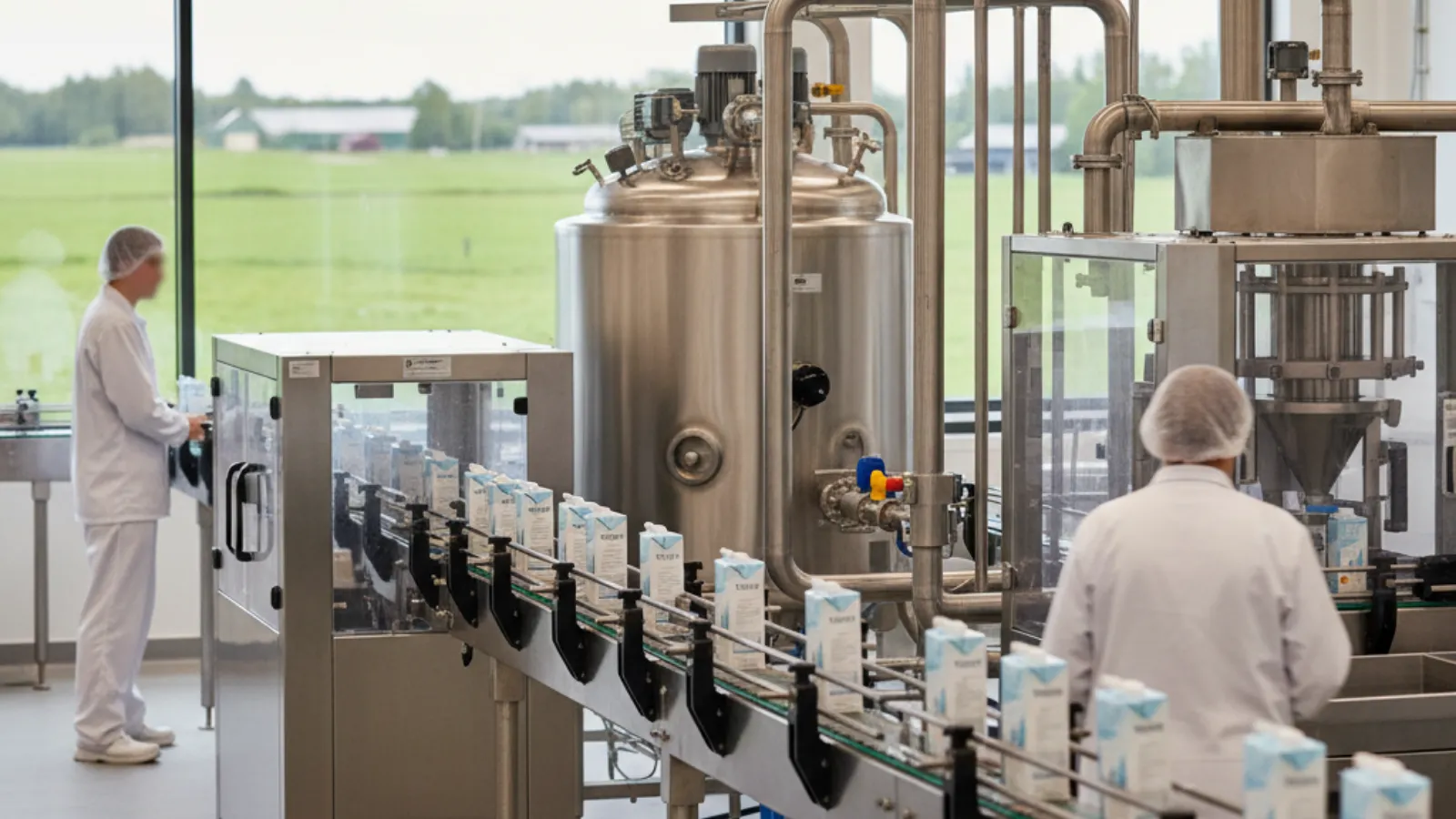
Most of the coverage reads Fonterra's message in Shanghai as a China growth story. I read it as a race. Fonterra is building a plant for more than 50 million litres of long life cream a year. On Zenith's figures, China's own dairies already fill 159 million litres of aseptic cream. My view is that the plant's real test is whether imported cream keeps its place as local fillers grow.
What Fonterra is building at Edendale
Fonterra first set out the plan in 2024. The plant sits at Edendale in Southland, the co-op's oldest dairy site. It costs about 150 million New Zealand dollars. It starts at more than 50 million litres of UHT cream a year. Fonterra plans to take it past 100 million litres by 2030. It brings 70 new jobs to the site. Fonterra said the first cream would come off the line in August this year. Neither of its leaders gave a start date in Shanghai. So the safe reading is that the plant is at or near start-up. Here is why Edendale got the plant. Southland has a deep supply of cream. Fonterra already splits that cream off for butter and milk fat. A UHT line turns part of it into a higher priced product on the same site.
What Fonterra told China at the import expo
Fonterra is at the China International Import Expo for the ninth year running. Chairman Peter McBride told the Global Times the plant will serve cafes and bakeries across Asia. He named China as the main target. Chief executive Richard Allen told China Daily the same thing. China is still Fonterra's largest single market. Its sales there rose 3.8% to 7.407 billion New Zealand dollars in the year to July. That matters because cream is where Fonterra wants that number to grow. The co-op runs six application centres in China. Chefs there help bakery and tea chains build products around Anchor cream and butter. The reason is simple. A chain that designs a cake around one cream finds it costly to switch. The centre wins the recipe, and the plant then fills the order.
Why cream suits the long life carton
Cream is a good fit for aseptic filling. Here is why. UHT heat kills the germs, and the sterile pack keeps new ones out. The cream can then sit on a shelf for months without a fridge. That removes the cold chain from a farm in Southland to a bakery in Chengdu. A cafe or bakery uses cream every day, in fixed recipes. It wants the same whipping result from every pack, all year. Chilled cream from the other side of the world cannot promise that. It would need air freight, or a cold container and a short life on arrival. Fonterra's own estimate is that world demand for UHT cream grows more than 4% a year to 2032. On Zenith's figures, Chinese aseptic cream averages 905 millilitres a pack. That is a trade pack for a kitchen rather than a small carton for a home fridge.
China already fills its own cream
Zenith's Global Aseptic Packaging Market Report 2026 shows how fast local supply has grown. Chinese cream output doubled in five years, from 91 million litres to 187 million in 2025. All of the 159 million aseptic litres are ambient UHT. Family cartons carry 143.1 million litres. Bag-in-box carries a further 8.0 million. The buyers are the same ones Fonterra courts: coffee chains, tea chains and bakeries. That happens because a local plant has three edges over an import. It delivers in days rather than weeks. It prices in yuan, so a swing in the New Zealand dollar does not touch it. It can also tune its cream to a local recipe. So the space Fonterra built its cream trade in is now filling with Chinese product.
What happened to imported milk in China
China has run this test before, with milk. Imports of packaged milk peaked at about 996,000 tonnes in 2021. They fell for three years running, to roughly 410,000 tonnes in 2024. The mechanism is price. Chinese farms grew their herds, and raw milk prices fell. Local UHT milk got cheaper on the shelf, and imported packs could not follow it down. New Zealand still holds 38.9% of the import trade that is left. But that trade has shrunk by more than half. Cream is a different market. Its buyer is a chef who pays for how a product performs. That buys Fonterra time. It does not lock in a share.
The Zenith read: Edendale fills, but it must sell performance
We think Edendale will run full, but its cream must earn a higher price through how it whips and holds. The demand is there. Zenith forecasts Chinese cream output at 247 million litres by 2030. Edendale's planned 100 million litres would serve China and South East Asia together. In the South East Asian markets the report covers, local dairies fill very little UHT cream. Most of that shelf is imported. So the plant has two outlets, and only one of them faces strong local rivals. Fonterra's six centres in China are its best defence. That matters because a recipe built around Anchor cream keeps the order when a cheaper local pack appears. The figure that would change our call is the price gap. If Chinese UHT cream falls well below imported cream, as milk did, chains will test the switch. Then Fonterra will lean harder on South East Asia.
This also raises a wider question about where long life cream gets filled. Is it the country that milks the cows, or the country that eats the cakes? That is one of the areas we are tracking across global aseptic packaging markets in our 2026 research. Our Global Aseptic Packaging Market Report 2026 splits cream by country, pack type and pack size, with forecasts to 2030.
Going deeper on this market? See the Global Aseptic Packaging Market Report 2026.

Global Water Database 2026
Packaged, bulk, flavoured and premium water in 86 markets, to 2030.
More information
Global Cheese Database 2026
Production, imports, exports and consumption for 39 cheese types across 48 countries, with actuals through 2025 and forecasts to 2030. Buy one market or any five with a single-user, departmental or corporate licence, or get your free database and report sample first.
Get your free database & report sampleStrategic Insights
📊 Analytics & Strategic Insight
Imported UHT cream keeps its place in Asia only while chefs pay for how it performs
The decision most in this industry are avoiding:
👉 The fight is in the recipe more than the pack. Chinese chains choose a cream when they design a product. A switch means testing every cake and drink on the menu again.
👉 South East Asia is the safer outlet for Edendale. Indonesia fills 12 million litres of cream at home, and none of it is aseptic. Thailand fills only 3.5 million litres.
👉 China still buys dairy for its kitchens. Its dairy imports reached 9.69 billion US dollars in the first nine months of 2026. Cheese, whey and protein lines led the growth.
Here's the full context:
→ 2021: Chinese imports of packaged milk peaked at about 996,000 tonnes.
→ 2024: Fonterra announced the Edendale plant in September. Ground was broken in December.
→ 2025: Walls and roof went up at Edendale. Chinese cream output reached 187 million litres.
→ 2026: Fonterra set August as the month for first cream. Its China sales rose 3.8% in the year to July.
→ Most recent: Fonterra's leaders spoke at the import expo in Shanghai. Both named UHT cream as a growth line.
What this means for aseptic fillers, converters and equipment suppliers:
✅ The carton supplier should follow cream to the plant that fills it. Edendale's packs leave New Zealand already filled. Chinese cream growth calls for lines inside China instead.
✅ The equipment sales team should sell kitchen results. Cream buyers judge a line by how the product whips and holds. Control of fat and heat sells the machine.
✅ The Chinese dairy planner should price cream lines against the import. A local plant wins on freight and currency. It still needs a recipe win to keep a chain.
What this means for market decisions:
1️⃣ Asian UHT cream stays attractive because its buyers are businesses. Chains buy on results and keep a cream for years.
2️⃣ Local Chinese fillers gain on price, while Fonterra holds the recipe. In each chain, the winner is the cream that reaches the test kitchen first.
3️⃣ An entrant should test the price gap before building in China. Ask what discount a chain needs to switch. Then ask how long its tests take.
The Zenith view:
This proves Fonterra sees UHT cream as its best growth line in Asian kitchens. It does not prove imported cream keeps its share in China. The figure that settles it is the price gap between local and imported UHT cream. Fonterra's half year result in early 2027 gives the first read.
The data behind this story
📦 Global Aseptic Packaging Market Report 2026
148.4 billion litres and 344 billion packs across 39 markets, split by category, pack type and pack size, with 2025 actuals and forecasts to 2030. A free 40-page sample is on the page.
→ Read the free sample
Weighing a UHT cream line or a dairy move into China? Zenith helps food and beverage companies assess market size, growth, competitors, pricing and route to market before they invest.
→ Discuss your market
Zenith Consulting
Submit your food & beverage project enquiry.
Share your requirements. If there is a strong fit, we’ll come back with an indicative investment range, project timeline and recommended strategic approach.
Reviewed by Zenith Consulting’s senior food & beverage strategy team.
Our market reports
All reports and databases Available now
Global Aseptic Packaging Market Report 2026
39 markets, 2025 actuals and forecasts to 2030 by category, region and pack type.
View report Available now
Global Cheese Database 2026
48 markets and 39 cheese types: production, trade and consumption to 2030.
View report Available now
UK Water Drinks Reports 2026
Plain, flavoured and functional water in the UK: companies, brands, own label and forecasts to 2030.
View report- Available now
Global Water Database 2026
Packaged, bulk, flavoured and premium water in 86 markets, to 2030.
View report  Available now
Global Premium Bottled Water Report 2026
Premium water volume, value and brands, with six country deep dives.
View report Available now
Global Water Dispense Market Reports 2026
Coolers, dispensers and operators across 35+ markets, with forecasts to 2030.
View report- Free tool
Cheese Market Sizer
Size any of 48 cheese markets: 2025 consumption, kg per person, your market share and headroom.
Open free tool
Related analyses
- Sustainability, Regulation & Risk
US Puts 50% On Canadian Cheddar And Gouda Over A 6,376 Tonne Cheese Quota That Is Already 97% Full
Named Canadian cheeses have paid a 50% US duty since 15 September 2026, and a New Jersey food firm sued on 20 October to stop it. The quota rule behind the fight covers 6,376 tonnes and was filled to about 97% last year.
Read analysis → - Market & Category Growth
US Cheese Ships At $2.01 A Pound And Lands At $4.10: USTR Opens Its Trade Barrier List To Cheese Exporters
US cheese exports hit a record 143.6 million pounds in July and 943.7 million pounds in the seven months to July. USTR has opened its annual barrier list until 29 October, and the buckets that cost cheese volume are not the tariff ones.
Read analysis → - Corporate Strategy & Portfolio
General Mills' $2.1 Billion Gamble: Why the Cheerios Maker Is Shrinking on Purpose Before Its June 24 Earnings
General Mills heads into its Q4 FY2026 report on June 24 facing a third straight year of falling sales. The decline is not an accident. It is the plan.
Read analysis →
Share it with your peers
Pass this analysis to colleagues who track the food and beverage market.
Zenith Market Intel
Need a specific food or beverage market report?
Tell us which category, region or question would be useful for your team.
Sister Publication
Also follow our Water Dispense Market Intelligence
Category analyses, operator briefings, and investor signals across the global water dispense market.