US Puts 50% On Canadian Cheddar And Gouda Over A 6,376 Tonne Cheese Quota That Is Already 97% Full
Named Canadian cheeses have paid a 50% US duty since 15 September 2026, and a New Jersey food firm sued on 20 October to stop it. The quota rule behind the fight covers 6,376 tonnes and was filled to about 97% last year.
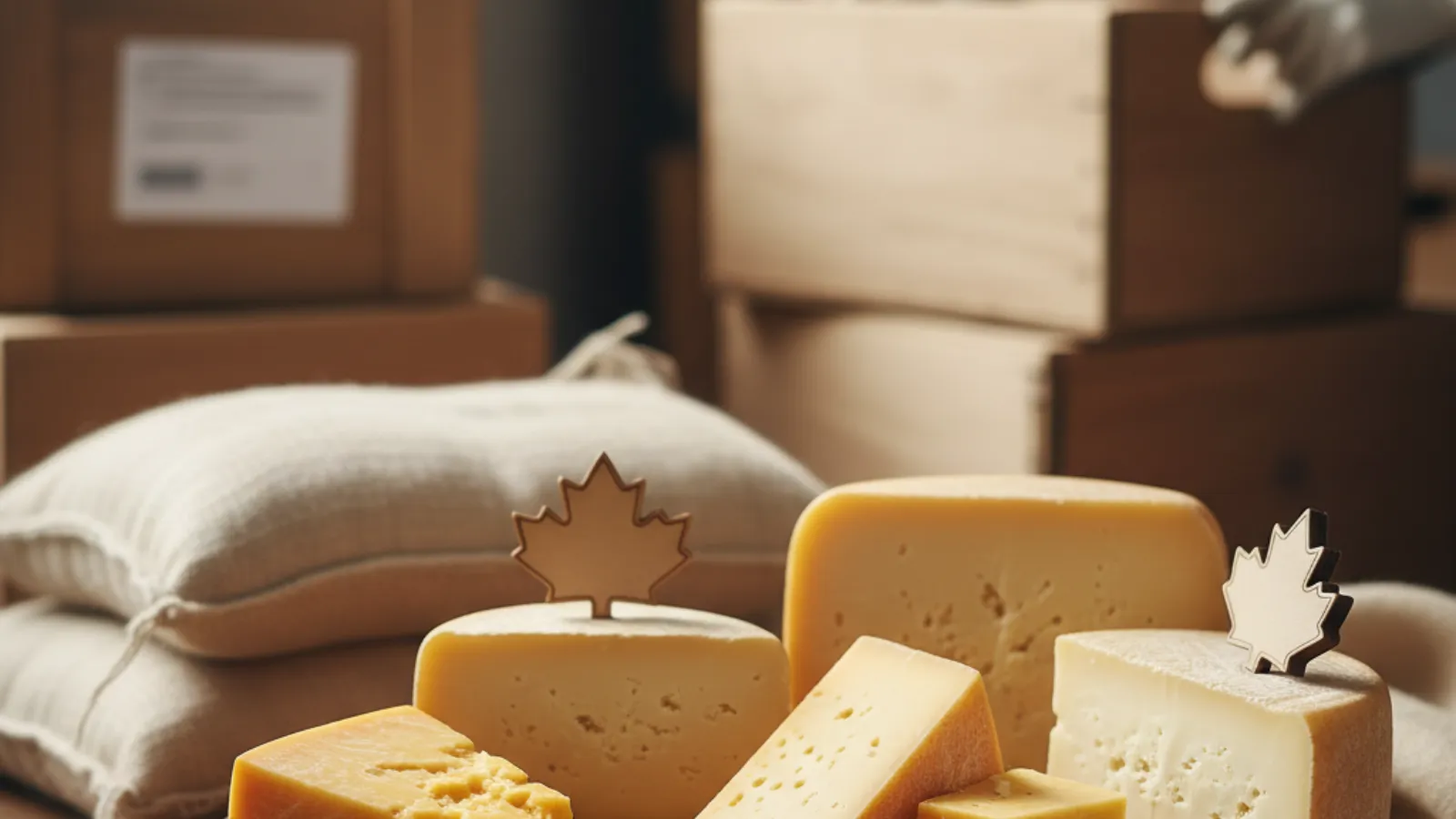
I keep asking buyers one thing about this fight. What does winning it actually add? Named Canadian cheeses have paid a 50% US duty since 15 September. The quota rule behind it covers 6,376 tonnes. The trade filled about 97% of that last year.
What Washington charged, and when
Proclamation 11064 was signed on 8 September 2026 and published on 14 September. It took effect at 12:01 a.m. on 15 September. It added cheddar, Swiss, Parmesan, Gouda and other named cheeses to a 50% duty.
The duty itself is older. Washington set it on 22 August under Section 338 of the Tariff Act of 1930. It first hit whey, milk protein, lactose, casein and powders.
Cheese arrived through an order about alcoholic drinks. A second order the same day added cheese not made from cow's milk. Neither one reads like a cheese measure on the cover.
The rule behind the duty is a permit rule
Canada runs its cheese imports through quotas. Each trade deal carries its own. Who may hold a share of one differs by deal.
Under the Canada and EU deal, shops may hold a share. Under USMCA, they may not. Processors and traders hold that one instead.
The EU rules go further still. Since 2022, a tenth of that share is held back for new entrants. Large firms take a fifth of the rest and smaller ones take three tenths. No single holder may take more than a fifth of the quota.
Global Affairs Canada publishes the 2026 volumes. The USMCA cheese quota is 6,376 tonnes. The EU one is 16,000 tonnes. The WTO quota runs to 20,411 tonnes.
The quota is already full
This is the part the tariff coverage skips. Canada's cheese quotas were filled to about 97% in 2025. That holds across the WTO, EU, CPTPP and USMCA lines.
A full quota does not grow because the permit changes hands. Open it to shops and the tonnage stays at 6,376. Only the names on the paperwork change.
Who is suing, and what they want back
Gellert Global Group filed at the US Court of International Trade on 20 October. It asked the court to halt the duty three days later. The firm is a family food business in Elizabeth, New Jersey, trading since 1945.
Scale is the reason it can carry the fight. It handles more than 4,000 food lines from more than 60 countries. It works with over 1,000 approved plants. The duty costs it close to $40 million a year, by its own estimate.
It sells American cheese in Canada through its Canadian arm. It also buys Canadian brie made from upstate New York milk. The same firm loses on both sides of the border.
Its case runs on two points. The first is that a 1974 trade law replaced the 1930 one. The second is notice. Seven days were given, where the statute asks for thirty.
It wants the duty ruled unlawful and the money returned with interest. It has asked to bring the claim for other American buyers too.
The exposure runs the wrong way
Canada ships just over $80 million of cheese south each year. It buys around $400 million of US dairy. The smaller trade is the one Washington stopped.
Canada answered on 8 September with 25% on all US cheese. Washington went further on 29 September. Whey, molasses and non-alcoholic beer were barred from entry altogether.
One line in that order deserves a read. If a court strikes the ban down, the 50% duty applies instead. Winning the case does not reopen the border at zero.
What this means for the market
A sourcing book built on this duty may be undone by a court. Refunds with interest would change the landed cost after the fact. Buyers should model both outcomes now.
Three things decide the commercial case here. The first is who may hold a permit in each market. The second is how full that quota already runs. The third is who takes the US shelf while Canadian cheese is priced out.
European and other suppliers gain that space this quarter. Canadian makers need a second outlet for the same cheese. An entrant should price the permit rather than the tariff.
For makers and buyers, the decision now rests on one thing. How much of a market does a quota line really control? Our Global Cheese Database 2026 covers 39 cheese types across 48 markets in tonnes.
Going deeper on this market? See the Global Cheese Database 2026.

Global Water Dispense Market Reports 2026
Coolers, dispensers and operators across 35+ markets, with forecasts to 2030.
More information
Global Cheese Database 2026
Production, imports, exports and consumption for 39 cheese types across 48 countries, with actuals through 2025 and forecasts to 2030. Buy one market or any five with a single-user, departmental or corporate licence, or get your free database and report sample first.
Get your free database & report sampleStrategic Insights
📊 Analytics & Strategic Insight
Washington is spending a tariff to change who holds a permit
The decision most in this industry are avoiding:
👉 A full quota cannot hand anyone more volume. Canada's cheese quotas ran at about 97% last year. A permit change moves the holder.
👉 The duty reached cheese through a drinks order. Cheddar, Swiss and Gouda were added on 8 September. Collection began a week later.
👉 A win in court does not reopen the border at zero. The order says the 50% duty applies instead. Buyers should plan for both.
Here's the full context:
→ 2020: USMCA opened Canada's dairy quotas. Shops were left out of the cheese one.
→ 2021: A trade panel ruled on how Canada hands out those shares. The dispute carried on.
→ July 2026: Washington set a 50% duty under Section 338. It named Canada's cheese quota rules as the reason.
→ September 2026: Cheddar, Swiss, Parmesan and Gouda joined the list. Collection started on 15 September.
→ Most recent: Gellert Global Group sued on 20 October. It asked for the duty to be halted three days later.
What this means for cheese producers, traders and buyers:
✅ A duty under appeal is a price with two values. Refunds with interest are in play. Landed cost should be run both ways.
✅ European suppliers hold the gap on the US shelf. Canadian lines left a slot open. Someone fills it this quarter.
✅ Canadian makers need a second outlet. About $80 million of cheese went south each year. That trade is on hold.
What this means for market decisions:
1️⃣ The prize here is a permit rather than a tonne. The quota is 6,376 tonnes and nearly full. Winning changes who ships it.
2️⃣ Processors and traders hold the USMCA paper today. US sellers want shops added to that list. The margin would move along the chain.
3️⃣ An entrant should check who may hold the permit. The rule differs by trade deal. That one line decides how the cheese reaches a shelf.
The Zenith view:
These orders show that Washington will use a tariff on a quota rule. They do not show that US cheese will gain volume in Canada. The quota is small and close to full. What decides the commercial case is whether a buyer can get a permit at all.
The data behind this story
🧀 Global Cheese Database 2026
Production, imports, exports and consumption for 39 cheese types across 48 countries, in tonnes, with actuals to 2025 and forecasts to 2030. The 2026 edition is being built market by market. Waitlist members get the pre-launch price and a free sample country chapter.
→ Join the waitlist
Weighing a cheese market or a change of sourcing country? Zenith helps food and beverage companies assess market size, growth, competitors, pricing and route to market before they invest.
→ Discuss your market
Zenith Consulting
Submit your food & beverage project enquiry.
Share your requirements. If there is a strong fit, we’ll come back with an indicative investment range, project timeline and recommended strategic approach.
Reviewed by Zenith Consulting’s senior food & beverage strategy team.
Our market reports
All reports and databases Available now
Global Aseptic Packaging Market Report 2026
39 markets, 2025 actuals and forecasts to 2030 by category, region and pack type.
View report- Available now
Global Cheese Database 2026
48 markets and 39 cheese types: production, trade and consumption to 2030.
View report  Available now
UK Water Drinks Reports 2026
Plain, flavoured and functional water in the UK: companies, brands, own label and forecasts to 2030.
View report Register interest
Global Water Database 2026
Packaged, bulk, flavoured and premium water in 86 markets, to 2030.
View report Register interest
Global Premium Bottled Water Report 2026
Premium water volume, value and brands, with six country deep dives.
View report- Available now
Global Water Dispense Market Reports 2026
Coolers, dispensers and operators across 35+ markets, with forecasts to 2030.
View report
Related analyses
- Health, Nutrition & Functional
Leprino's 35 Million Dollar Lubbock Whey Expansion Will Finish Other Cheese Makers' Protein
Leprino Nutrition has completed a 35 million dollar expansion at Lubbock, Texas, quadrupling its microparticulated whey capacity. The new line will finish whey solids bought in from other cheese makers, which moves the tight step in the chain away from the vat.
Read analysis → - Corporate Strategy & Portfolio
SIG Sets A 20% Aseptic Carton Margin Target And Writes Down The Rest Of The Portfolio
SIG has raised its margin guidance, set a mid-term aseptic carton target above 20% and booked a charge of about 250 million euros against everything else. Zenith's data puts the world aseptic market at 344 billion packs, so the growth SIG has promised has to be taken from somebody else's lines.
Read analysis → - Health, Nutrition & Functional
Cheese Gets $3.76 Billion Of A $15 Billion US Dairy Build-Out While Milk And Cream Take $5.63 Billion
United States dairy firms are building more than $15 billion of new plant capacity across 23 states. Cheese holds $3.76 billion of it, and milk and cream have overtaken cheese at $5.63 billion.
Read analysis →
Share it with your peers
Pass this analysis to colleagues who track the food and beverage market.
Zenith Market Intel
Need a specific food or beverage market report?
Tell us which category, region or question would be useful for your team.
Sister Publication
Also follow our Water Dispense Market Intelligence
Category analyses, operator briefings, and investor signals across the global water dispense market.