The Philippines Fills 87% Of Its Aseptic Packs Under Half A Litre: Why South East Asia's Fastest Carton Market Is About To Slow
The Philippines fills its aseptic market in small cartons for corner shops and school milk, and it makes none of its own packs. Zenith's data shows why growth is set to slow and who fills the next brand.
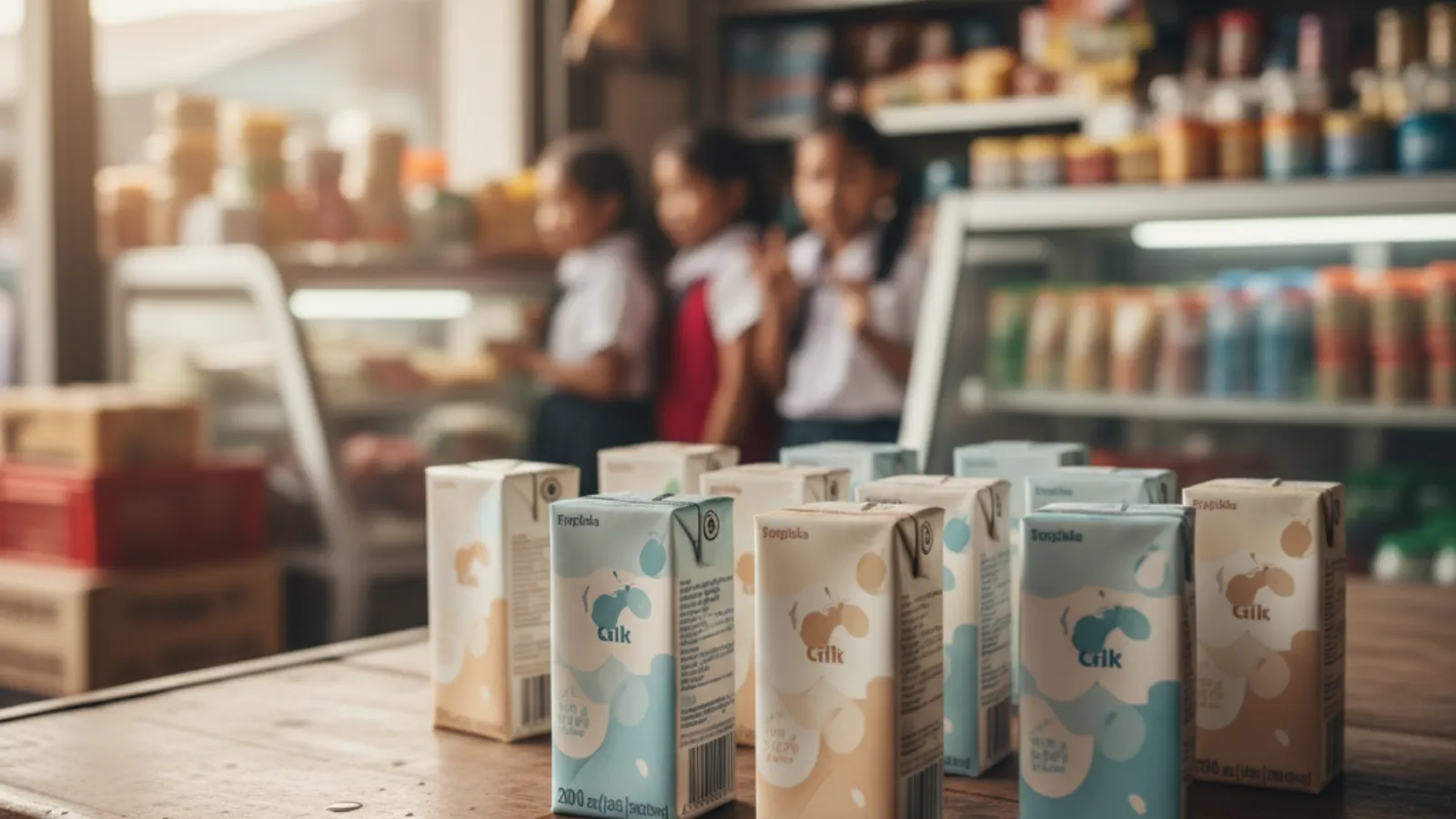
I keep seeing the same mistake in South East Asian packaging plans. Teams size the litres and forget the pack. The Philippines shows the cost of that mistake more clearly than any market we track. Zenith's Global Aseptic Packaging Market Report 2026 puts the country at 832 million litres in 2025. Those litres went into 2,793 million packs.
A fast market measured in small packs
Aseptic volume grew 10.5% a year from 2020 to 2025. That is the fastest rate in South East Asia. The average pack holds just 298 ml. Portion cartons under half a litre carry 87% of all packs. Here is why the pack is so small. Most Filipino shoppers buy at the sari-sari store, the corner shop on every street. Those shops sell one serving at a time, a trade known as tingi. A state school feeding scheme buys the same small carton for children. So the pack follows the till rather than the product. A supplier who counts litres here will under-count the machine hours and the board.
Why aseptic is still a thin slice of the drinks shelf
The Philippines made 3,558 million litres of long-life drinks in 2025. Only 8% of that was filled aseptically. Preservatives keep 2,085 million litres stable. Hot fill takes 1,190 million litres. The reason is simple. Most Filipino drinks are acid, sweet and cheap. An acid drink can be filled hot or dosed with preservatives at low cost. It has no need for a sterile filler. Aseptic filling costs more per litre, and shelf prices here leave little room for it. Juice drinks show it best. They go mainly into the stand-up doypack pouch, sold to children for school. That pouch is kept stable with preservatives. So a big juice drink habit has built only a small aseptic juice line. The large PET tea brands fill hot for the same reason.
Where the aseptic growth came from
Most of the growth sits in dairy. The country has very little fresh milk of its own. So Nestlé and Alaska Milk rebuild milk from imported powder and milk fat. They fill it at plants in Cabuyao, Tanauan and San Pedro. That matters because rebuilt milk must travel without a cold chain. It needs a long life at room heat, which means UHT and a sterile carton. Flavoured milk is the largest single aseptic line, at 155 million litres. Nestlé's Chuckie and ready-to-drink Milo lead it in 110 ml cartons. Ready-to-drink coffee is the fastest drinks line, up 21.8% a year. The mechanism is acid again. Milk coffee is low in acid, so it cannot be hot filled like tea. It goes into the aseptic carton instead.
The can-to-carton switch inside dairy
The quieter shift is in evaporated milk. It is the largest packed dairy line in the country, and almost all of it still sits in cans. Filipino cooks use it in desserts, coffee and sauces. Alaska Milk now sells its Evaporada in a one-litre Tetra Pak carton. The aseptic carton tier grew 16.5% a year from 2020. The packed category grows only 2.9% a year. Here is why the gap matters. Growth in the carton comes from taking cans off the shelf. It does not need more cooks. A can is cooked after sealing, so it needs heavy metal and long cooking times. The carton is lighter, cheaper to ship and easier to pour. A format switch can feed aseptic growth even when the category itself barely moves. The same switch is open to cream and plant drinks still sold in cans and glass.
A market that makes none of its own packs
The Philippines converts no aseptic packaging material at all. It has no board mill, no laminator and no sleeve maker. Tetra Pak ships its laminate in from its Binh Duong plant in Vietnam. That plant added a second converting line in July 2025. Cartons carry 97.6% of aseptic litres, so nearly the whole market rests on that import lane. The first local challenge came this year. Actron Industries, a Filipino co-packer, installed a SIG Midi 12 line at Calamba, Laguna. It is rated at 12,000 cartons an hour in 500 ml, 750 ml and one litre packs. Commercial output was due from the end of June 2026. That gap exists because the big fillers own their lines. Small brands had nowhere local to go. Actron is the first merchant aseptic carton capacity in the country. It chose carton over an aseptic PET block, which says a lot about where demand sits.
The Zenith read: growth halves, and a tax decides how far
We expect Philippine aseptic growth to slow to 5.7% a year to 2030. That still takes the market to 1,098 million litres. The slowdown comes from the base. That happens because the past five years were a build-out. New milk plants came on stream, and each one added a step of volume. Drinking habits moved far more slowly. The family carton also suits the supermarkets now spreading beyond Manila, which sell the one-litre brik. Our call is that family cartons and milk coffee carry the next five years while the portion pack slows. We have portion cartons growing 4.5% a year against 7.0% for family cartons. The figure that would change our call is a flavoured milk tax. A House bill filed in November 2025 would extend the sweet drink excise to flavoured milk. The first drink tax began in 2018. Coca-Cola FEMSA's Philippine volume then fell 8.1% in one quarter. A cut of that size in flavoured milk would pull our forecast down. Plain white milk sits outside the tax, so the family carton would hold up best.
For carton suppliers and co-packers, the important question is now simple. Who fills the next brand that cannot afford its own line? Our Global Aseptic Packaging Market Report 2026 splits the Philippines by category, pack type and pack size to 2030.
Going deeper on this market? See the Global Aseptic Packaging Market Report 2026.
Global Water Dispense Market Reports 2026
Coolers, dispensers and operators across 38 markets, with forecasts to 2030.
More information
Global Cheese Database 2026
Production, imports, exports and consumption for 39 cheese types across 48 countries, with actuals through 2025 and forecasts to 2030. Buy one market or any five with a single-user, departmental or corporate licence, or get your free database and report sample first.
Get your free database & report sampleStrategic Insights
📊 Analytics & Strategic Insight
The Philippine aseptic boom was a build-out of milk plants, and the next stage belongs to co-packers
The decision most in this industry are avoiding:
👉 Coconut water is the export story hiding inside the juice line. Shipments rose from 75,646 tonnes in 2023 to 123,899 tonnes in 2024.
👉 Cream is a cooking product that happens to need a sterile carton. Nestlé All Purpose Cream sells in 250 ml packs with an 11-month shelf life.
👉 Ambient yoghurt pots are the only new pack type in the forecast. Asia Brewery's Cabuyao plant puts 20 million litres into pots by 2030.
Here's the full context:
→ 2024: Axelum signs a deal to fill Vita Coco coconut water in Tetra Pak cartons.
→ 2025: Tetra Pak opens a second converting line at Binh Duong in Vietnam.
→ November 2025: A House bill proposes taking the sweet drink excise into flavoured milk.
→ 2026: Actron's SIG Midi 12 line at Calamba is due to start commercial output.
→ Most recent: Zenith counts the Philippines at 832 million litres. Our forecast has growth slowing from here.
What this means for aseptic fillers, converters and equipment suppliers:
✅ The converter's sales team should plan board by pack count rather than by litre. A litre of cream in portions needs four packs.
✅ The co-packer's planners should chase the brands with no line of their own. Smaller juice, coffee and cream brands had no local merchant filler before Actron.
✅ The machine supplier should expect family carton fillers to lead new orders. Family cartons grew 14.7% a year against 8.9% for portion cartons.
What this means for market decisions:
1️⃣ The market stays attractive on packs even as litres slow. Our pack count rises to 3,699 million by 2030.
2️⃣ Tetra Pak holds the shelf and SIG has one foothold. Axelum's Tetra Paper use rose 36.5% in 2024 on coconut water alone.
3️⃣ An entrant should test the tax before it buys a line. UHT white milk, at 126 million litres, sits outside the excise.
The Zenith view:
This proves the Philippine aseptic market grew on new milk plants and small packs. It does not prove shoppers will keep paying for flavoured milk once a tax lands. The figure that settles it is the first full year of flavoured milk volume after any excise change. If that line holds within a few points, our 2030 forecast stands.
The data behind this story
📦 Global Aseptic Packaging Market Report 2026
148.4 billion litres and 344 billion packs across 39 markets, split by category, pack type and pack size, with 2025 actuals and forecasts to 2030. A free 40-page sample is on the page.
→ Read the free sample
Weighing an aseptic carton or co-packing move in the Philippines? Zenith helps food and beverage companies assess market size, growth, competitors, pricing and route to market before they invest.
→ Discuss your market
Zenith Consulting
Submit your food & beverage project enquiry.
Share your requirements. If there is a strong fit, we’ll come back with an indicative investment range, project timeline and recommended strategic approach.
Reviewed by Zenith Consulting’s senior food & beverage strategy team.
Our market reports
All reports and databases Available now
Global Aseptic Packaging Market Report 2026
39 markets, 2025 actuals and forecasts to 2030 by category, region and pack type.
View report Available now
Global Cheese Database 2026
48 markets and 39 cheese types: production, trade and consumption to 2030.
View report Available now
UK Water Drinks Reports 2026
Plain, flavoured and functional water in the UK: companies, brands, own label and forecasts to 2030.
View report Available now
Global Water Database 2026
Packaged, bulk, flavoured and premium water in 86 markets (44 on sale now), to 2030.
View report Available now
Global Premium Bottled Water Report 2026
Premium water volume, value and brands, with six country deep dives.
View report- Available now
Global Water Dispense Market Reports 2026
Coolers, dispensers and operators across 38 markets, with forecasts to 2030.
View report - Free tool
Cheese Market Sizer
Size any of 48 cheese markets: 2025 consumption, kg per person, your market share and headroom.
Open free tool
Related analyses
- Corporate Strategy & Portfolio
Fonterra's Edendale UHT Cream Plant Adds 50 Million Litres As China's Own Aseptic Cream Fill Doubles
Fonterra is building a plant at Edendale for more than 50 million litres of UHT cream a year, aimed at cafes and bakeries in Asia. China's own dairies already fill far more aseptic cream, so the plant must win on how its cream performs in the kitchen.
Read analysis → - Health, Nutrition & Functional
SIG Targets 85% Paper In Aseptic Cartons: Aluminium-Free Still Has Enormous Room To Scale
SIG says it is working towards 85% paper content in its aseptic cartons, with polymer and fibre barriers doing the work aluminium used to do. Set against the 344 billion aseptic packs filled worldwide in 2025, the aluminium-free carton is still a rounding error.
Read analysis → - Health, Nutrition & Functional
Danone Grew 4.5% Last Year. North America Barely Managed 1.5%. Protein Is the Fix
Danone lifted group sales 4.5% in 2025, yet its North American business grew barely 1.5% in a recent quarter, its weakest since 2019. As Danone prepares to report first-half results on 29 July, protein and functional nutrition are the bet meant to fix its most stubborn market.
Read analysis →
Share it with your peers
Pass this analysis to colleagues who track the food and beverage market.
Zenith Market Intel
Need a specific food or beverage market report?
Tell us which category, region or question would be useful for your team.
Sister Publication
Also follow our Water Dispense Market Intelligence
Category analyses, operator briefings, and investor signals across the global water dispense market.