Britain Reopens French Raw Milk Cheese Imports After 16 Months While Italy And Spain Stay Shut
Defra cleared France's entry on its dairy import list on 26 October, 16 months after raw cow milk cheese was suspended. Italian and Spanish raw milk cheese is still shut out, and the growing end of the British cheese shelf is the part that feels it.
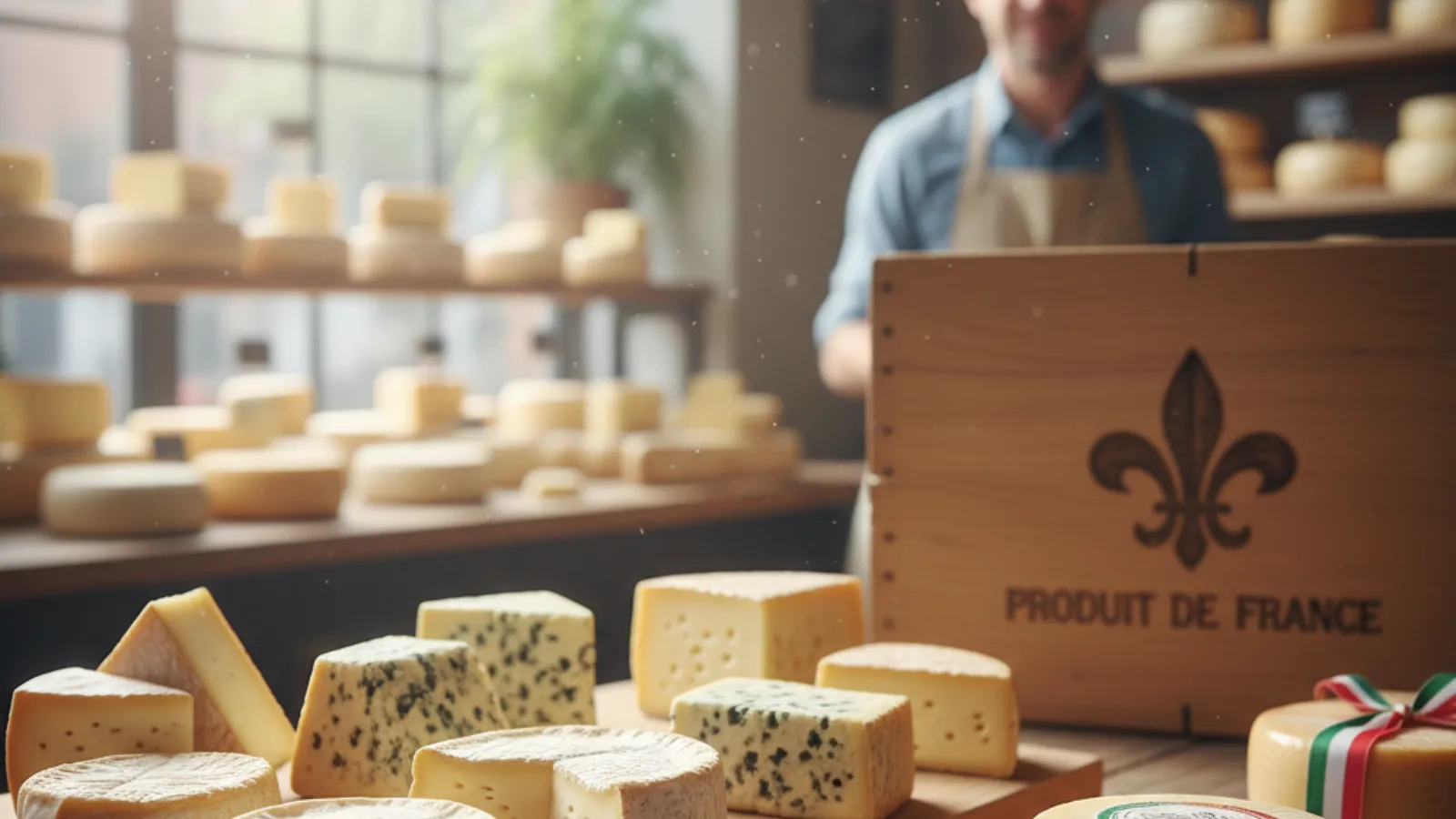
If I bought cheese for a British shop this week, I would not start with price. I would start with one column in a government list. That column reopened French raw milk cheese on 26 October, 16 months after it closed.
What changed in the list on 26 October
Britain controls dairy imports through a third country list. France sat on that list with a footnote against it. The footnote suspended raw cattle milk and raw dairy from 1 July 2025. Defra reviewed the steps France had taken and cleared the entry. France is now authorised on the list with no footnote at all. A separate notice revoked the matching measures on hides, skins and other by-products. That revocation applies in England, Scotland and Wales from 27 October. Defra published the change as a note to official vets on 28 October. The mechanism here is worth holding on to. The ban never sat in cheese law. It sat in an import list, so one line edit closed the lane and one line edit opened it. Nothing about the cheese itself had to change in either direction.
Why the rule bit soft cheese and left hard cheese alone
The suspension covered cattle milk only. Sheep and goat cheese travelled as normal throughout. Roquefort, Ossau-Iraty and Pecorino Sardo were never in scope. The virus can survive in raw milk and is killed by heating it. So the rule cuts at the heat step in the dairy. That step is also where the style of a cheese is decided. A young raw cow cheese cannot be heated and stay the same cheese. Brie de Meaux, Camembert de Normandie and Reblochon stopped arriving. Cooked and pressed types could still travel with a signed line on the health form. The reason the maker could not simply switch is a legal one. A protected name carries a written method, and some of those methods require raw milk. Heat the milk and the cheese loses the name it sells under. The trade also reported an exemption for cheese whose ageing began before 23 May 2025. That exemption ran itself down as the aged stock sold through.
Italy and Spain are still shut out
France is the exception rather than the pattern. Italy was suspended on 25 June 2025, days after its first case. Spain followed on 7 October 2025, and both entries still carry the footnote today. Each country is listed on its own and reviewed on its own. That matters because there is no regional reopening to wait for. Heated Italian cheese still arrives with the right paperwork. Raw Italian cow cheese does not. A buyer who built a counter around one Italian raw milk cheese has no route to it through France. Sheep and goat milk is not a safe harbour everywhere either. Greece, Romania, Bulgaria and Croatia are all suspended for sheep and goat raw milk, under a different animal disease. So the open and closed lanes now form a patchwork across Europe rather than a border.
The lane stayed shut long after the disease stopped
France recorded 117 outbreaks in all. A French minister reported no active cases on 12 January 2026. The list changed on 26 October, more than nine months after that. That happens because a list reopens when a reviewing office finishes its work. It does not reopen when the last case clears. Two different instruments had to move as well. One was the third country listing, held by the import office. The other was the set of special measures signed for each nation. Cattle vaccination in the French south west reached 96.5% by late February. Spain then found new cases into March, which kept a live risk next door. So the French file sat behind a Spanish problem for part of the year.
The scale behind all of this is large. Britain brought in 119,564 tonnes of cheese and curd in the final quarter of 2025. About 99% of that came from the European Union. Imports are not a fringe part of the British cheese shelf. They are most of its variety.
The part of the shelf this closed is the part that grows
Shop data shows where the demand sits. In the twelve weeks to 5 September, speciality and continental cheese volume rose 4.6%. Other cow cheese rose 10.6% while cheddar fell 1.3%. Imports supply most of that growing end. British cheese imports rose 7,800 tonnes in the first half of this year. Cheese and curd is also Britain's largest dairy import by value, at GBP 1,090m. Zenith's own work puts fresh cheese at over a third of world cheese demand. It grows about 2.4% a year to 2030. The reason these two lines meet is simple. Fresh and soft types sell on short life and counter display. They are the first types a raw milk rule removes. Cheddar and other long keepers sail through untouched. So the rule took out the growth and left the flat part alone.
The Zenith read on what reopens next
We think Italian raw cow milk cheese is the next entry to be cleared, inside the first half of 2027. Italy's last reported case was in November 2025, and Sardinia left its restriction zones in February. Spain is the one to leave out of a sourcing plan for now. Its cases ran latest, and that is what a reviewing office reads first. The figure we watch is the date of Spain's last reported case. That matters because every fresh case restarts the clock the French file has just run. We would not model a Spanish raw milk listing back on a British shelf before 2028. There is a second thing we would do today. We would ask which of our own listings could be closed the same way. Our opening claim settles here. A desk that reads price before it reads the list will buy a cheese it cannot ship.
One list entry rarely moves a national cheese market on its own. What matters is how many of them are open at the same time. That wider flow is what we track in the Global Cheese Database 2026. It carries production, imports, exports and demand in tonnes. The cover is 39 cheese types across 48 markets. Actuals run to 2025 and forecasts reach 2030.
Going deeper on this market? See the Global Cheese Database 2026.
Cheese Market Sizer
Size any of 48 cheese markets: 2025 consumption, kg per person, your market share and headroom.
Open free tool
Global Cheese Database 2026
Production, imports, exports and consumption for 39 cheese types across 48 countries, with actuals through 2025 and forecasts to 2030. Buy one market or any five with a single-user, departmental or corporate licence, or get your free database and report sample first.
Get your free database & report sampleStrategic Insights
📊 Analytics & Strategic Insight
An import list, rather than a cheese market, decided what Britain could buy
The decision most in this industry are avoiding:
👉 The closure was read as a French problem and it was a method problem. Any country with raw cattle milk cheese on a listing can be shut in a week. The risk sits with the recipe rather than with the origin. A range built on raw milk carries that risk everywhere.
👉 Reopening a lane does not return the sales that left it. Buyers who swapped to a heated substitute keep it until the next range review. Shelf plans and printed menus move far slower than a footnote does.
👉 The sheep and goat exemption was the quiet winner of the whole episode. Those cheeses held a clear route through the closure and gained listings while cow milk rivals were absent. That is a supply position worth defending now rather than a lucky break.
Here's the full context:
→ June 2025: Lumpy skin disease is confirmed in cattle in Italy and then in France.
→ July 2025: Britain suspends raw cattle milk and raw dairy from both countries from 1 July.
→ October 2025: Spain is suspended after its own case, closing a third raw milk source.
→ January 2026: France reports no active cases, and the suspension stays in place anyway.
→ Most recent: Defra cleared the French entry on 26 October. Italy and Spain remain suspended.
What this means for cheese producers, traders and buyers:
✅ The buyer holding a continental range should re-rate the French raw milk lines this month. A reopened lane is a price position while rivals still stock the heated copy. The window closes once everyone has relisted.
✅ The paperwork desk at an importer should reread the health form wording before the first order. The attestation route that carried cooked cheese through the closure is a different claim from a clean listing. Mixing the two is how a pallet gets turned back.
✅ The chef or menu planner still carries risk on any Italian raw cow cheese. Write the substitute into the specification rather than leaving it to the order. A printed menu is harder to change than a delivery note.
What this means for market decisions:
1️⃣ British demand for imported speciality cheese is growing while its supply is set by animal health files. That makes the market attractive and the sourcing fragile at the same time. Judge it on listing history as well as on demand.
2️⃣ French raw milk makers get their British route back first and their southern rivals do not. Share has moved on paperwork rather than on product or price. Check which origin sits behind each line before reading any share table.
3️⃣ An exporter weighing Britain should map its own country's listing record before it maps the shelf. A clean animal health history is a trading asset here. It decides whether a range can be promised at all.
The Zenith view:
This proves an animal health listing can close a cheese segment for well over a year. One line reopens it. It does not prove the lost volume comes back. The figure that settles it is Britain's import tonnage of French cheese in the first quarter of next year. Our own cheese work shows imports growing almost twice as fast as demand across the markets we cover. The EU27 and the United States hold more than 40% of the volume added by 2030. Supply rules, rather than appetite, are what decide who serves that growth.
The data behind this story
🧀 Global Cheese Database 2026
Production, imports, exports and consumption for 39 cheese types across 48 countries, in tonnes, with actuals to 2025 and forecasts to 2030. Country workbook plus market insights dossier, delivered by Akos Petri, with a free sample country chapter on the page.
→ See the database
Evaluating a cheese market or a sourcing route? Zenith helps food and beverage companies assess market size, growth, competitors, pricing and route to market before they invest.
→ Discuss your market
Zenith Consulting
Submit your food & beverage project enquiry.
Share your requirements. If there is a strong fit, we’ll come back with an indicative investment range, project timeline and recommended strategic approach.
Reviewed by Zenith Consulting’s senior food & beverage strategy team.
Our market reports
All reports and databases Available now
Global Aseptic Packaging Market Report 2026
39 markets, 2025 actuals and forecasts to 2030 by category, region and pack type.
View report- Available now
Global Cheese Database 2026
48 markets and 39 cheese types: production, trade and consumption to 2030.
View report  Available now
UK Water Drinks Reports 2026
Plain, flavoured and functional water in the UK: companies, brands, own label and forecasts to 2030.
View report Register interest
Global Water Database 2026
Packaged, bulk, flavoured and premium water in 86 markets, to 2030.
View report Register interest
Global Premium Bottled Water Report 2026
Premium water volume, value and brands, with six country deep dives.
View report Available now
Global Water Dispense Market Reports 2026
Coolers, dispensers and operators across 35+ markets, with forecasts to 2030.
View report- Free tool
Cheese Market Sizer
Size any of 48 cheese markets: 2025 consumption, kg per person, your market share and headroom.
Open free tool
Related analyses
- Corporate Strategy & Portfolio
Elopak's European Aseptic And Fresh Carton Sales Rose 10.7% While America Stood Still On Rationed Board
Elopak's European carton sales rose 10.7% in the third quarter while its American carton line held flat at EUR 85.5m. Rationed board, rather than weak demand, set the American number, and that changes how a carton market should be read.
Read analysis → - Corporate Strategy & Portfolio
SIG Sets A 20% Aseptic Carton Margin Target And Writes Down The Rest Of The Portfolio
SIG has raised its margin guidance, set a mid-term aseptic carton target above 20% and booked a charge of about 250 million euros against everything else. Zenith's data puts the world aseptic market at 344 billion packs, so the growth SIG has promised has to be taken from somebody else's lines.
Read analysis → - Corporate Strategy & Portfolio
Aseptic Other Dairy Fills A Third Of The World's Packs On 27,177 Million Litres: Family Cartons Grow 6% A Year While Portion Cartons Stall
Aseptic other dairy filled 27,177 million litres and 115,532 million packs in 2025, a third of the world total. Family cartons grew 6.0% a year while portion cartons went backwards.
Read analysis →
Share it with your peers
Pass this analysis to colleagues who track the food and beverage market.
Zenith Market Intel
Need a specific food or beverage market report?
Tell us which category, region or question would be useful for your team.
Sister Publication
Also follow our Water Dispense Market Intelligence
Category analyses, operator briefings, and investor signals across the global water dispense market.